
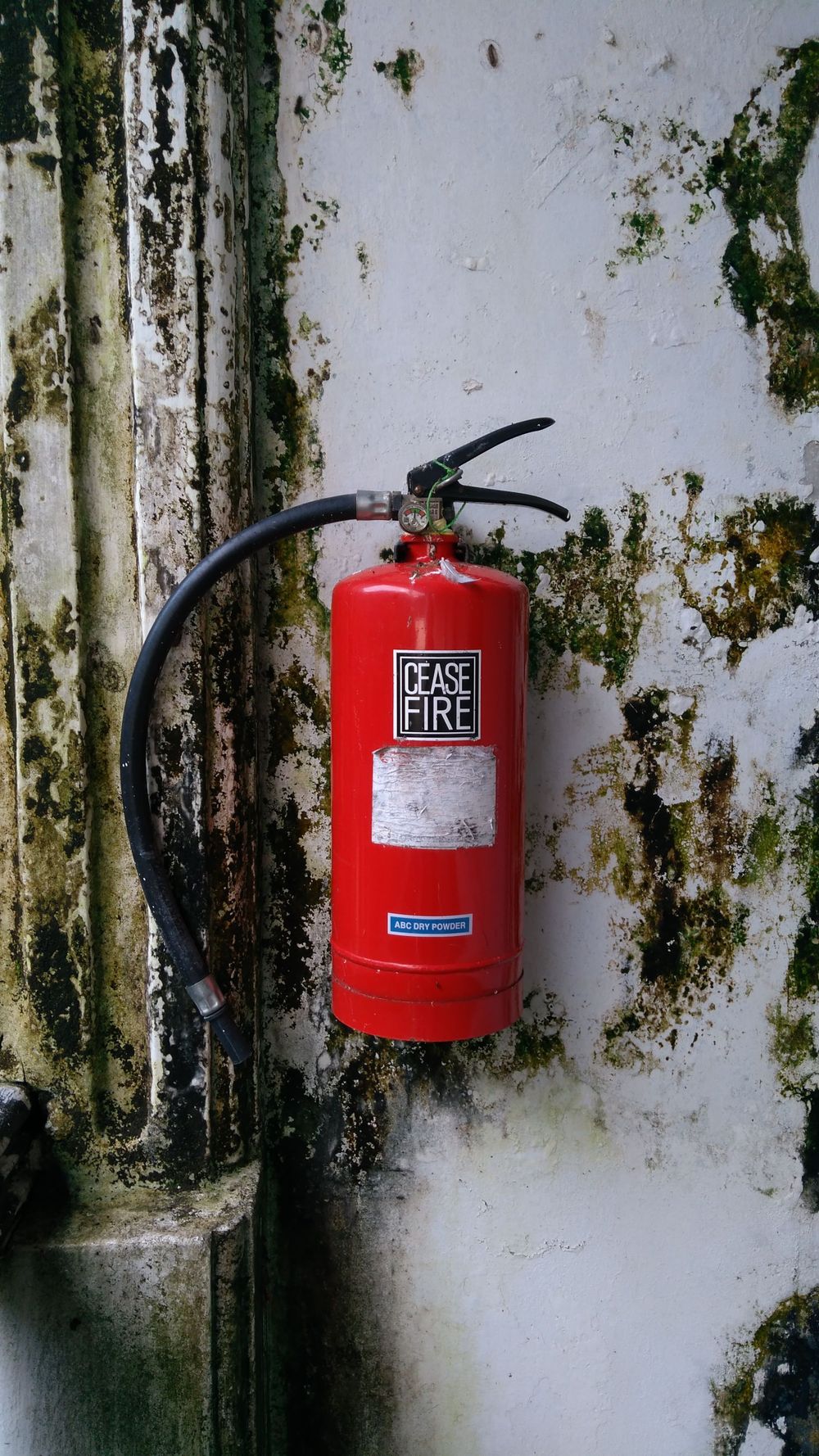
How to Use a Fire Extinguisher: The PASS Method
A fire extinguisher is simple to use — but only if you have learned how before the day you need it. The PASS method gives you a clear, memorable sequence, and an equally clear sense of when to walk away.
Most people pass dozens of fire extinguishers every week without ever thinking about them. Then a wastepaper bin or a pan catches alight, and suddenly that red cylinder is the most important object in the room. The trouble is that an extinguisher you have never operated is far harder to use under stress. A few minutes of understanding now can make all the difference later.
First, the most important rule
Before any technique, fix one principle in your mind: your life matters more than property. An extinguisher is for tackling a small fire in its very earliest stage, when it is no bigger than a waste bin and you have a clear escape route behind you. If the fire is spreading, producing heavy smoke, or sitting between you and the exit, do not fight it. Raise the alarm, get everyone out, and call the fire service.
Never let an extinguisher tempt you into staying. The moment fighting a fire stops being obviously safe, leave — there is no possession worth a life.
The PASS method
If it is safe to act, the technique itself is easy to remember with the acronym PASS:
- P — Pull the pin. Grip the extinguisher upright and pull out the safety pin, which breaks the tamper seal and frees the handle.
- A — Aim low. Point the nozzle or hose at the base of the flames, not the top. The fuel is at the bottom; that is what you need to smother or cool.
- S — Squeeze the handle. Press the lever slowly and evenly to release the extinguishing agent.
- S — Sweep side to side. Move the nozzle steadily across the base of the fire until it is out, keeping the spray on the fuel.
Stand a sensible distance back when you start and only move closer as the flames die down. Most portable extinguishers empty in well under a minute, so act with purpose.
Stay safe while you do it
Position and awareness
- Always keep an exit at your back so you can retreat instantly.
- Never let the fire get between you and the door.
- Watch for smoke building up — if the room is filling, get out.
After the fire is out
- Keep watching the area, as fires can reignite.
- Report that the extinguisher has been used so it can be recharged or replaced — a discharged extinguisher is no use to the next person.
- Have the cause investigated to stop it happening again.
✅ Key takeaways
- Only tackle a small fire with a clear escape route — life always comes before property.
- PASS: Pull the pin, Aim low at the base, Squeeze the handle, Sweep side to side.
- Keep an exit behind you and never let the fire come between you and the door.
- Most extinguishers discharge in under a minute, so act decisively.
- Report any used extinguisher straight away so it can be recharged or replaced.
Using the right extinguisher matters
PASS is the technique, but choosing the correct extinguisher for the type of fire is just as important — using the wrong one can make things dramatically worse, such as putting water on an electrical or cooking-oil fire. That is why hands-on training, which covers both technique and extinguisher selection, is so valuable. Under the Fire Services Acts 1981 and 2003 and the Safety, Health and Welfare at Work Act 2005employers must provide appropriate equipment and ensure staff can use it; the local fire authority and the Health and Safety Authority (HSA) oversee these duties.
Fire Safety training from €33
Self-paced, HSA-aligned, certificate the same day — €33 per person.
Know your extinguishers too
Technique and selection go hand in hand. To match the cylinder to the hazard, read classes of fire explained, and consider our dedicated fire extinguisher course. For the wider picture, see our employer's guide to fire safety in the workplace in Ireland.


