
Fire Safety in the Workplace in Ireland: An Employer's Guide
A fire can turn a thriving business to ash in minutes, yet the measures that prevent it are mostly ordinary, inexpensive and well within reach. Here is how fire safety works in an Irish workplace, and what the law expects of you.
Most workplace fires are not freak events. They start from familiar, avoidable causes — overloaded sockets, blocked exits, careless storage, a missed maintenance check. That is the encouraging part: because the causes are ordinary, so are the solutions. Good fire safety is less about expensive kit and more about discipline, planning and people who know what to do.
The legal framework in Ireland
Two strands of law come together here. The Fire Services Acts 1981 and 2003 place a duty on the person having control of a premises to take reasonable measures to guard against the outbreak of fire and to ensure the safety of people on the premises. Oversight and enforcement sit with the local fire authority.
Running alongside this, the Safety, Health and Welfare at Work Act 2005obliges employers to protect the safety, health and welfare of staff, which includes managing fire risk as part of the overall risk assessment overseen by the Health and Safety Authority (HSA). In short, fire safety is both a building-control duty and a worker-safety duty.
The law does not ask for perfection. It asks for reasonable, proportionate measures — and for you to have actually thought it through before anything goes wrong.
Start with a fire risk assessment
Everything flows from understanding your own premises. A fire risk assessment looks at three questions: what could start a fire, who could be harmed, and what you will do about it. Walk the building and identify your ignition sources, your fuel and the people most at risk.
- Sources of ignition — electrical equipment, heaters, hot work, smoking areas, faulty wiring.
- Sources of fuel — paper, packaging, waste, flammable liquids, furnishings.
- People at risk — staff, visitors, contractors and anyone who may need extra help to evacuate.
Record your findings and the actions you will take, and review them whenever the building, layout or activities change.
Prevention before everything else
The cheapest fire is the one that never starts. Sensible housekeeping does most of the work: keep waste and combustibles under control, avoid overloading electrical circuits, service equipment on schedule, and manage any hot work with a permit system. Good order is not just tidiness — it removes the fuel that lets a small ignition become a serious fire.
Detection, escape and equipment
Getting people out safely
If a fire does start, the priority is always life. That means clear, unobstructed escape routes, exits that open easily, working emergency lighting and signage people can follow even in smoke. Escape routes blocked by stock or propped-open fire doors are among the most common — and most dangerous — failings.
Warning and fighting
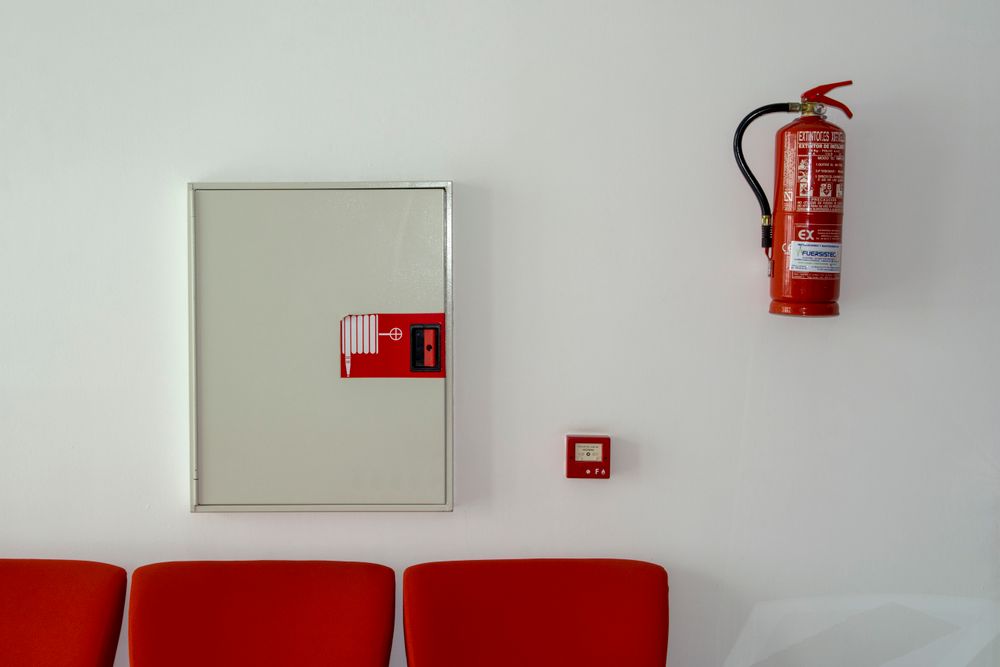
An adequate alarm system gives people the time they need to leave. Suitable, well-maintained fire extinguishers let trained staff tackle a small fire in its earliest moments — but only if it is safe to do so, and never at the cost of their own escape.
✅ Key takeaways
- Fire safety in Ireland is governed by the Fire Services Acts 1981 and 2003, enforced by the local fire authority, alongside the Safety, Health and Welfare at Work Act 2005.
- A recorded fire risk assessment is the foundation of everything else.
- Prevention through good housekeeping removes the fuel that turns a spark into a disaster.
- Clear escape routes, working alarms and emergency lighting protect life.
- Trained staff and regular drills turn a written plan into a real response.
People are your real defence
Equipment is useless if nobody knows how to use it or where to go. Appoint and train fire wardens, run regular evacuation drills, and brief every new starter on the alarm, the exits and the assembly point. A workforce that has practised the drill leaves calmly; one that has not, panics.
Fire Safety training from €33
Self-paced, HSA-aligned, certificate the same day — €33 per person.
Keep it alive
Fire safety is a routine, not a one-off. Test alarms, check extinguishers, keep exits clear and refresh training on a regular cycle. To go deeper on specific roles and skills, read about the fire warden's role and responsibilities and learn the practical steps in how to use a fire extinguisher.


