← Exit
Module 1 · Introduction to Risk Assessment0% complete · 14 slides left
Risk Assessment
Risk Assessment
Module 1
This course contains audio. Use headphones in public places.
Introduction
Introduction

Risk assessment is at the heart of managing health and safety at work. It means identifying the hazards in your workplace, evaluating the risks they present, and putting suitable controls in place to reduce the chance of injury or ill health.

Under the Safety, Health and Welfare at Work Act 2005, every employer in Ireland must assess the risks of all their work activities.

This module explains the key terms, and why risk assessment matters.

Course Aims
Course Aims

By the end of this course, you will be able to:

  • Explain the purpose of workplace risk assessment.
  • Recognise common workplace hazards, and the injuries and ill health they can cause.
  • Describe the legal duties of employers and employees under Irish health and safety law.
  • Identify hazards, assess risks, and choose suitable controls.
  • Apply the five steps of risk assessment in any type of workplace.
  • Protect employees, contractors, visitors and members of the public.
In This Module
In This Module

In this module, you will learn about:

  • Why risk assessments are important.
  • What a risk assessment is, and the five steps.
  • The meaning of hazard, risk and control measure.
  • What reasonably practicable means.
  • The general principles of prevention.
  • Who is responsible, and who should carry out a risk assessment.
Why Risk Assessment Matters

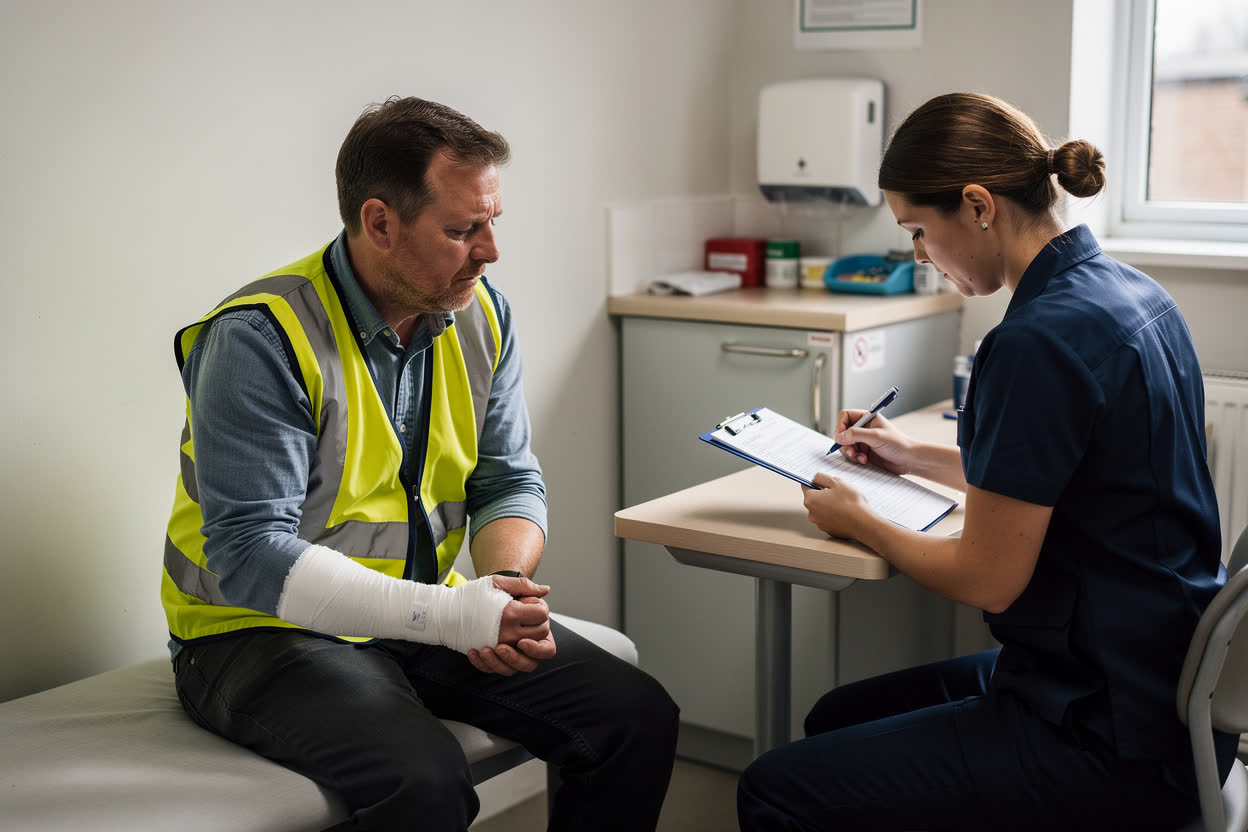
Every year in Ireland, thousands of workplace accidents and incidents are reported to the Health and Safety Authority, or HSA. Work-related injuries and illnesses affect employees in every industry.

Poor health and safety management can lead to serious injuries, long-term illness and deaths at work. It also costs businesses money, through absence, lost production, damage and claims.

Effective risk assessment helps employers prevent this harm, and meet their duties under the Safety, Health and Welfare at Work Act 2005.

The Benefits
The Benefits

A structured workplace risk assessment brings many benefits:

  • Better awareness of safety across the workplace.
  • Better identification of hazards and risks.
  • Fewer accidents, and less work-related ill health.
  • Less chance of compensation claims and legal action.
  • Greater employee confidence and morale.
  • Lower levels of absence.
  • A safer and healthier place for everyone.
What Is a Risk Assessment?

A risk assessment is a careful look at what could cause harm in your work, so that you can decide whether enough is being done to prevent it. It is required for all workplaces and all work activities, whatever their size. There are five steps:

  • Identify the hazards.
  • Decide who may be harmed, and how.
  • Evaluate the risks, and decide on control measures.
  • Record the findings, and put the controls in place.
  • Review the assessment regularly, and update it when things change.
Hazard, Risk and Control Measure
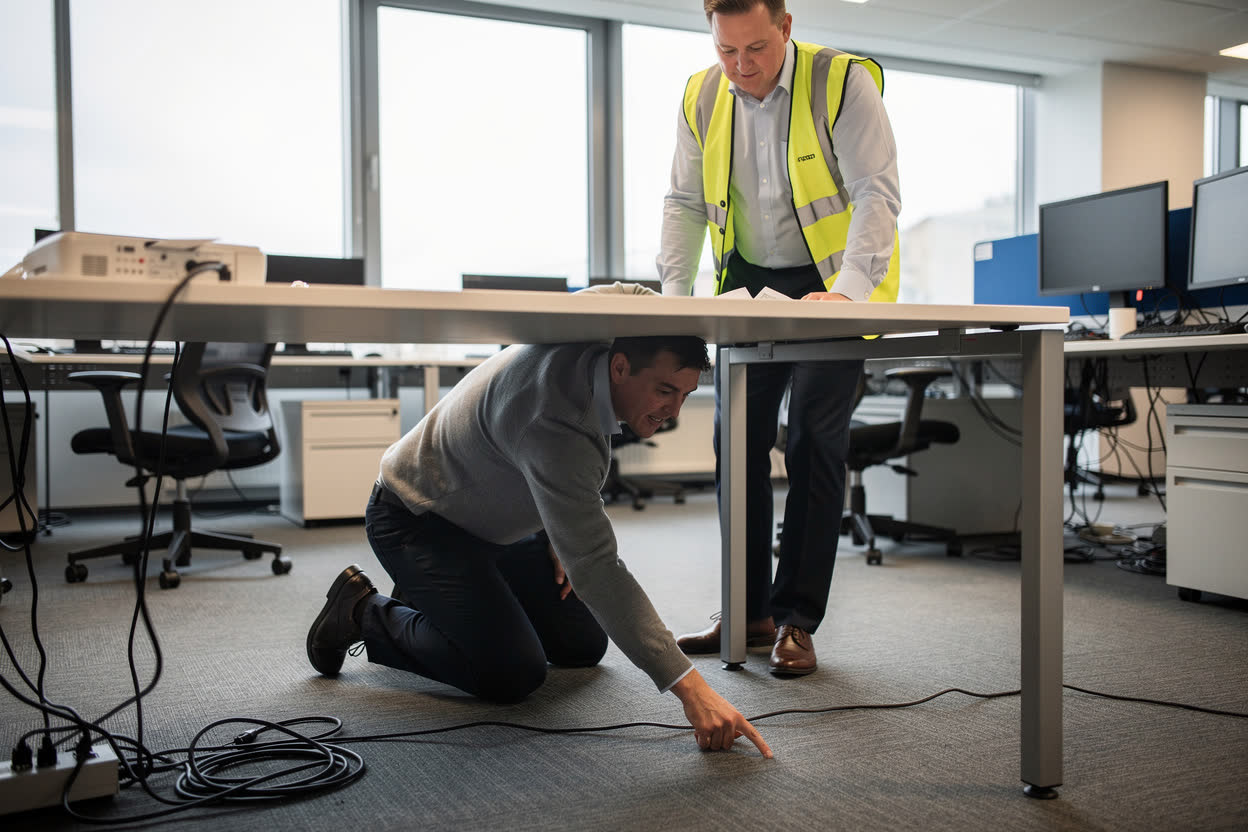
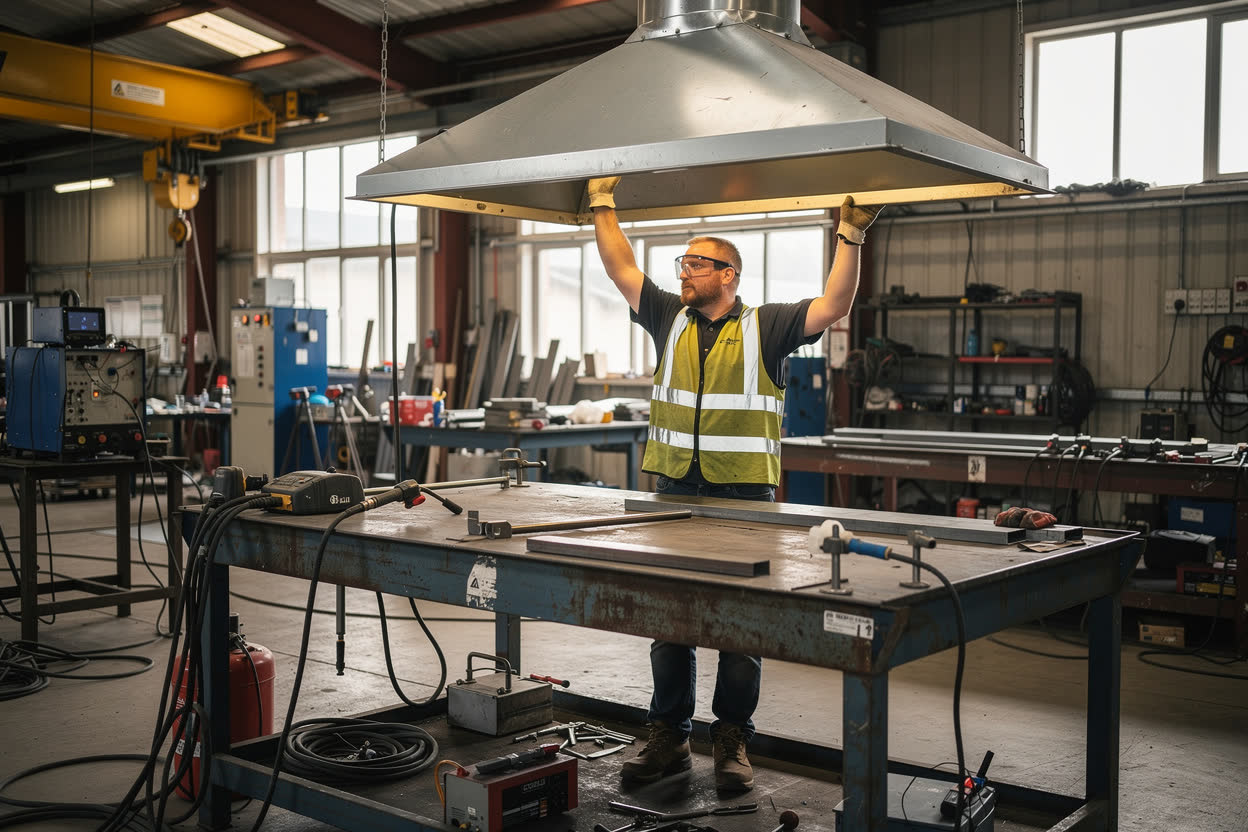
  • A hazard is anything with the potential to cause harm, such as injury, illness or damage. Manual handling, slippery floors, chemicals, electricity and working at height are all hazards.
  • A risk is the likelihood that a hazard will actually cause harm, together with how severe that harm could be.
  • A control measure is an action taken to remove a hazard, or to reduce the risk to an acceptable level.

For example, lifting heavy boxes is a hazard. Using a trolley is a control measure that reduces the risk.

Reasonably Practicable

The law requires employers to do what is reasonably practicable to protect employees and others.

This means balancing the level of risk against the time, cost, effort and resources needed to control it. Employers must put suitable controls in place, unless the cost or difficulty would be grossly out of proportion to the risk.

It does not mean removing every possible risk whatever the cost. Nor does it mean choosing the cheapest option, or waiting until an accident has happened.

The General Principles of Prevention

Schedule 3 of the 2005 Act sets out the general principles of prevention. Employers must apply them when deciding on controls. They include:

  • Avoid risks altogether, where possible.
  • Combat risks at source, as close to the hazard as possible.
  • Adapt the work to the individual, through good design of workplaces, equipment and methods.
  • Replace dangerous substances or processes with safer ones.
Principles of Prevention, Continued
  • Prevent access to dangerous areas and equipment.
  • Give collective protective measures, which protect everyone, priority over individual measures.
  • Give suitable information, instruction and training to employees.
  • Keep up with technical progress.

Remember: preventive control measures should always come before personal protective equipment, or PPE. We look at the order of controls, called the hierarchy of control, in Module 4.

Who Is Responsible?
Who Is Responsible?

The employer has the overall legal responsibility for making sure risk assessments are carried out, recorded and kept up to date.

Managers and supervisors often help carry them out, and must make sure controls are followed in their areas.

Employees must co-operate, follow the controls, and report hazards. Under the 2005 Act, employers must also consult employees on safety.

Suitable and Sufficient, and Competent
  • Suitable and sufficient means that the risk assessment fits the actual tasks, activities and risks in your workplace. A generic assessment can be a useful starting point, but it is never acceptable on its own, instead of an assessment specific to your workplace.
  • A competent person is someone with the necessary training, knowledge, skills, experience and practical ability to carry out a risk assessment properly. Holding a management role does not, on its own, make someone competent.
Summary

In this module, you have learned that:

A hazard is anything that may cause harm. A risk is the likelihood of harm, together with how severe it could be.

All workplaces and work activities need a risk assessment, and the employer has overall responsibility for it.

Reasonably practicable means balancing the risk against the time, cost and effort needed to control it.

In the next module, we will look at health and safety law and how it is enforced.

Knowledge Check
Who is a competent person for carrying out a risk assessment?
Select one answer, then press Check.
Anyone who holds a management or supervisory role
Someone with the necessary training, knowledge, skills and experience
An inspector from the enforcing authority
Any employee who has worked there for more than a year
Correct. A competent person has the training, knowledge, skills and experience to carry out the risk assessment properly.
Not quite. A job title or length of service does not make someone competent. What matters is training, knowledge, skills and experience.
Get the full course →Answer the question to unlock the next module.
Page 1 of 15