← Exit
Module 1 · Introduction to PPE and the Law0% complete · 18 slides left
PPE Course
PPE Course
Module 1
This course contains audio. Use headphones in public places.
Introduction
The last barrier between you and the hazardSelected · used · maintained · stored
Introduction

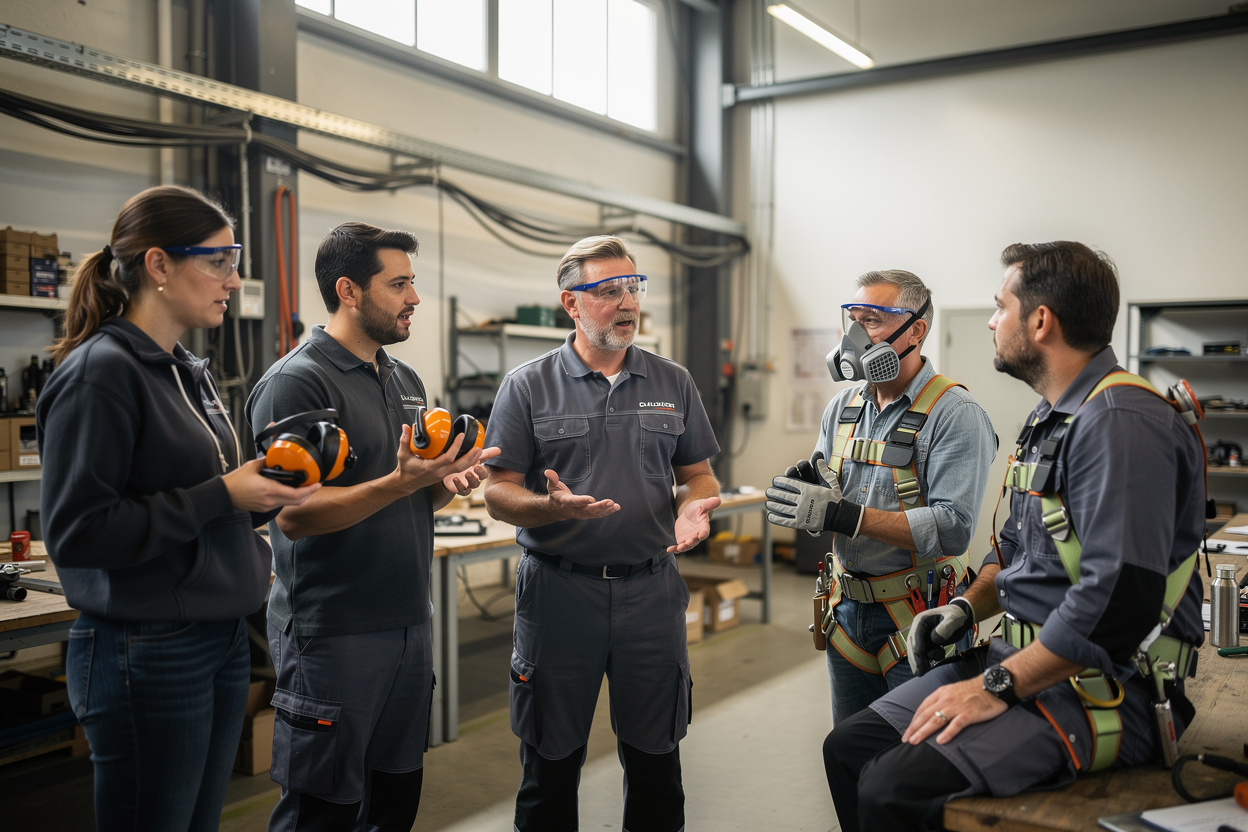
Personal protective equipment, or PPE, is the equipment a person wears or holds to protect themselves against risks to their health or safety at work. It is the last barrier between the worker and the hazard, and for many jobs it is the barrier that decides whether a mistake becomes an injury.

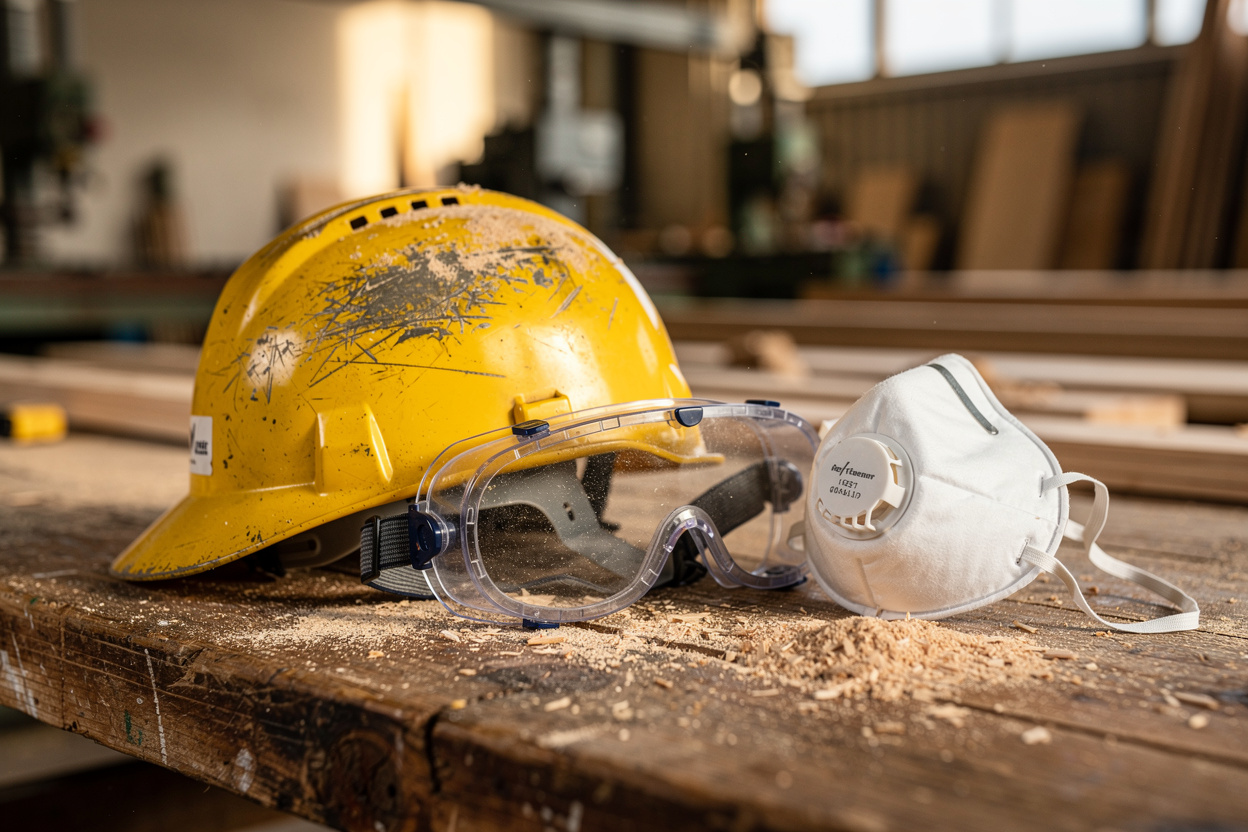
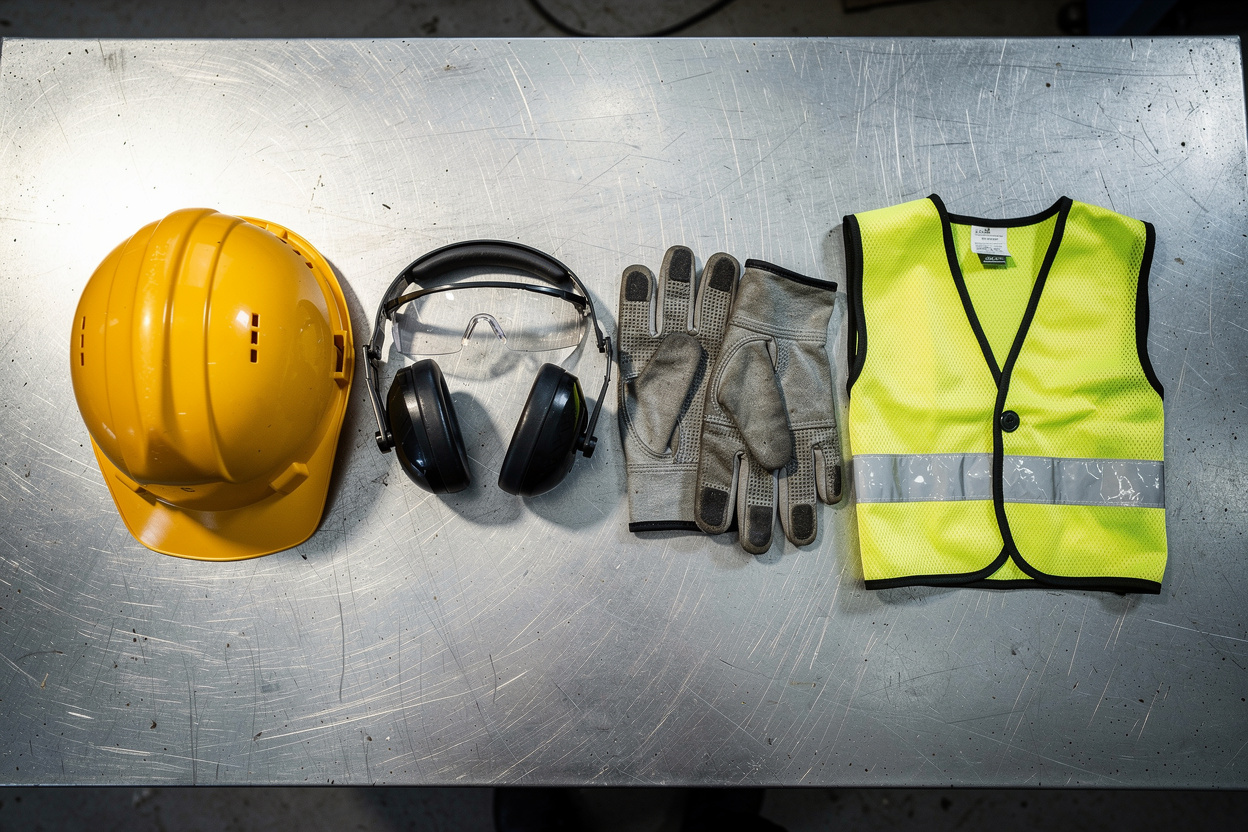
There are many kinds of PPE, each designed for particular work and particular hazards. Some hazards threaten safety, such as falling objects, which call for a safety helmet; others threaten health, such as hazardous dust, which calls for respiratory protection.

PPE only works when it is correctly selected, correctly used, monitored, maintained and stored. Poor PPE practice, the wrong item, a bad fit, a mask worn below the nose, a helmet left in the sun for years, leads directly to accidents and ill health that the equipment was meant to prevent.

This module explains the principles that make PPE an effective part of health and safety management: what PPE is, why it sits at the bottom of the hierarchy of control, and the legal duties that employers, the self-employed and employees have for its selection, use and care. Later modules cover risk assessment and each type of PPE in turn.
Course Aims
Course Aims

By the end of this course you will understand:

  • The role that PPE plays in protecting health and safety at work, and why it is the last resort rather than the first choice.
  • The regulations that govern the selection, use and maintenance of PPE in every kind of work activity.
  • The duties of employers, the self-employed and employees at every level for choosing, using and looking after PPE.
  • Why supervision and monitoring are essential if PPE is to protect anyone.
  • How a risk assessment covering the selection, use and maintenance of PPE is carried out.
  • How to choose the right PPE: design, standards and markings, fit and comfort, and compatibility with other PPE, together with the legal duties of manufacturers and suppliers.
  • Why information, instruction and training are essential for the safe use and care of PPE.
  • The main types of PPE, what each protects against, its limitations, and how it should be stored.
  • How PPE is maintained, inspected, cleaned and repaired, and when health surveillance is needed.
  • How PPE is used in emergencies.
Topics to be Covered

This module covers:

  • What PPE is, and why it matters at work.
  • Equipment that is not covered by the PPE regulations.
  • The role of PPE in health and safety at work.
  • The hierarchy of control, and why PPE is the last line of defence.
  • What 'reasonably practicable' means.
  • The law: the Safety, Health and Welfare at Work Act 2005, the General Application Regulations 2007, and the PPE-specific rules.
  • The duties of employers and the self-employed.
  • The duties of employees.

Read each slide and listen to the narration; the knowledge check at the end of the module is based on what you learn here.

What is PPE at Work?
Worn — or heldHead · eyes · ears · lungs · hands · feet · body
What is PPE at Work?

Under the Safety, Health and Welfare at Work (General Application) Regulations 2007, personal protective equipment means all equipment designed to be worn or held by a person at work to protect them against one or more hazards likely to endanger their safety and health, together with any addition or accessory designed for that purpose.

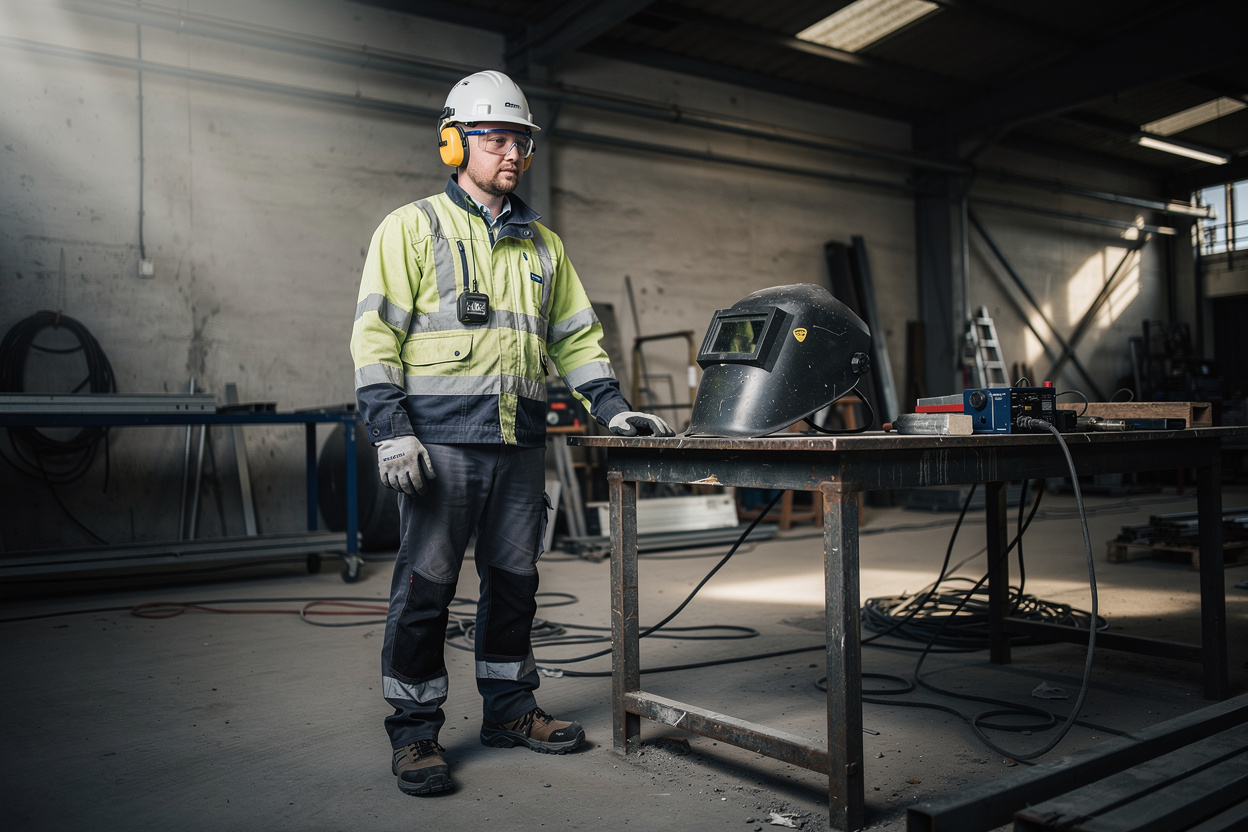
So PPE is not only what is worn, such as a helmet or gloves; it also includes what is held, such as a hand-held welding shield. Examples of PPE at work include:

  • Eye protection: safety spectacles, goggles, shields and visors.
  • Head protection: industrial safety helmets and bump caps.
  • Body protection: overalls, boiler suits, high-visibility clothing, waterproofs, chemical suits and chainmail aprons.
  • Respiratory protection: disposable and reusable respirators, powered respirators, air-fed hoods and helmets, and breathing apparatus.
  • Hearing protection: earmuffs and earplugs.
  • Hand and arm protection: gloves, gauntlets and protective sleeves.
  • Foot and leg protection: safety footwear with protective toecaps and penetration-resistant midsoles, gaiters and leggings.
  • Fall protection: harnesses, lanyards and restraint systems; and personal flotation devices for work near water.
Equipment Not Covered by the PPE Regulations
Uniform, hairnet: not PPEChainmail glove: PPE
Equipment Not Covered by the PPE Regulations

Some clothing and equipment worn at work is not PPE in the legal sense, and is not covered by the PPE regulations, although other health and safety law may still apply to it. It includes:

  • Ordinary working clothes and uniforms that do not specifically protect the health or safety of the wearer.
  • Uniforms and clothing worn to create a corporate identity.
  • Clothing worn for food hygiene purposes, such as hairnets and white coats, where the purpose is to protect the food rather than the person.
  • Motorcycle helmets and other equipment used on the public road, which are covered by road traffic law.
  • Equipment used during the playing of competitive sport.
  • Portable devices for detecting and signalling risks, such as gas detectors and radiation dosimeters, which are work equipment rather than PPE.

The line is drawn by purpose. Riding helmets for stable staff, life jackets for water-sports instructors, and cut-resistant gloves for a chef boning meat are all PPE, because they protect the worker against a risk of the work.

The Role of PPE in Health and Safety at Work
Last line of defenceAlongside other controls, never instead of them
The Role of PPE in Health and Safety at Work

PPE is so visible in workplaces that it is often mistaken for the main way of controlling risk. It is not. PPE is the last line of defence, to be used only when the risk cannot be adequately controlled by other means.

The next slides explain the hierarchy of control. In that hierarchy, relying on PPE is the least effective level of protection, because it does nothing to remove or reduce the hazard itself; it only places a barrier between the hazard and one person.

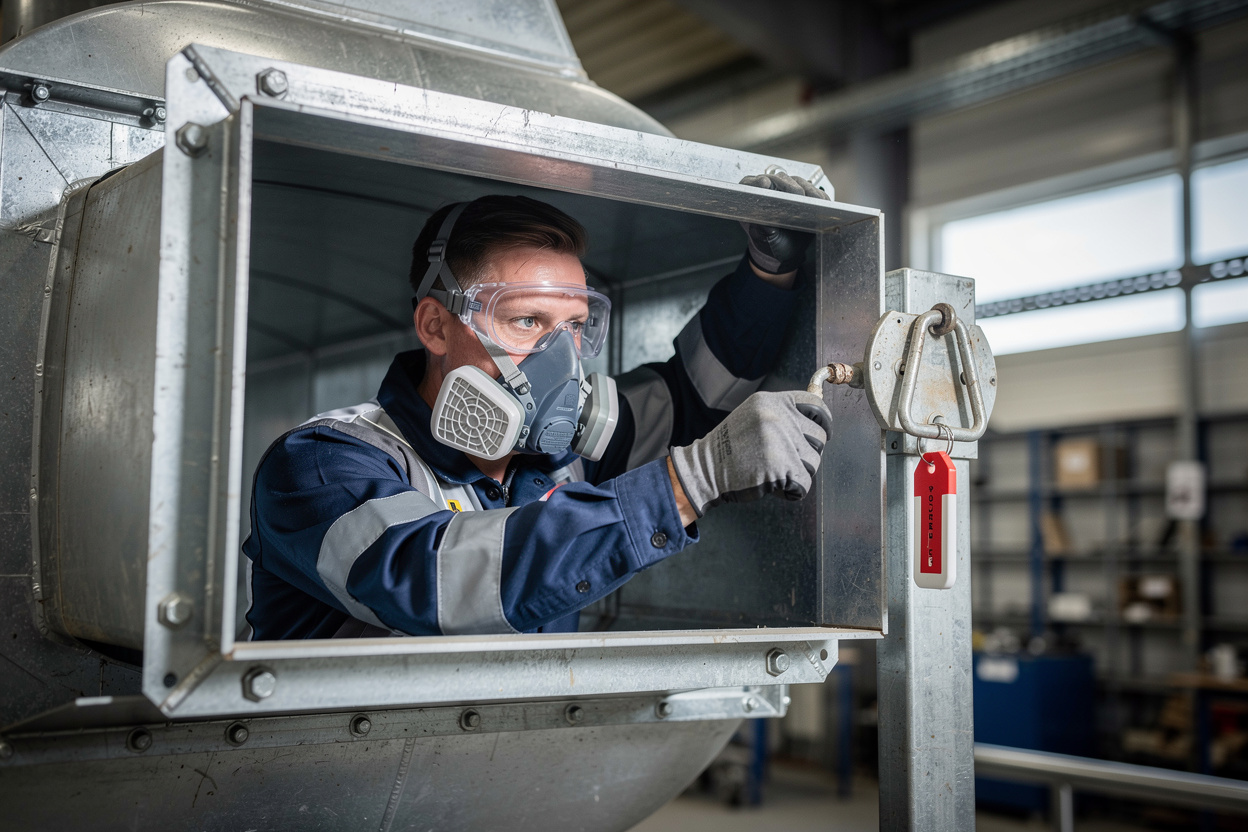
The regulations therefore require PPE to be used only where the risk cannot be adequately controlled by other means which are equally or more effective, and, in practice, alongside those other controls to deal with the risk that remains. For example, during the maintenance of a large fixed plant the ventilation may have to be switched off, and respiratory protective equipment becomes essential for that task even though the ventilation is the normal control.

PPE's low position in the hierarchy does not make it unimportant. Correctly chosen and correctly used, it prevents thousands of injuries every year. The point is that it must never be the first or the only measure considered.

The Hierarchy of Control
1 Eliminate2 Substitute3 Engineering controls4 Administrative controls5 PPE — last
The Hierarchy of Control

The hierarchy of control sets out the order in which employers and the self-employed must consider control measures. Each level is considered in turn, and you move down to the next only where the higher level is not reasonably practicable:

  • 1. Elimination: remove the hazard altogether, for example by buying materials pre-cut so that no cutting is done on site.
  • 2. Substitution: replace the hazardous process or substance with a less hazardous one, for example a water-based paint instead of a solvent-based one.
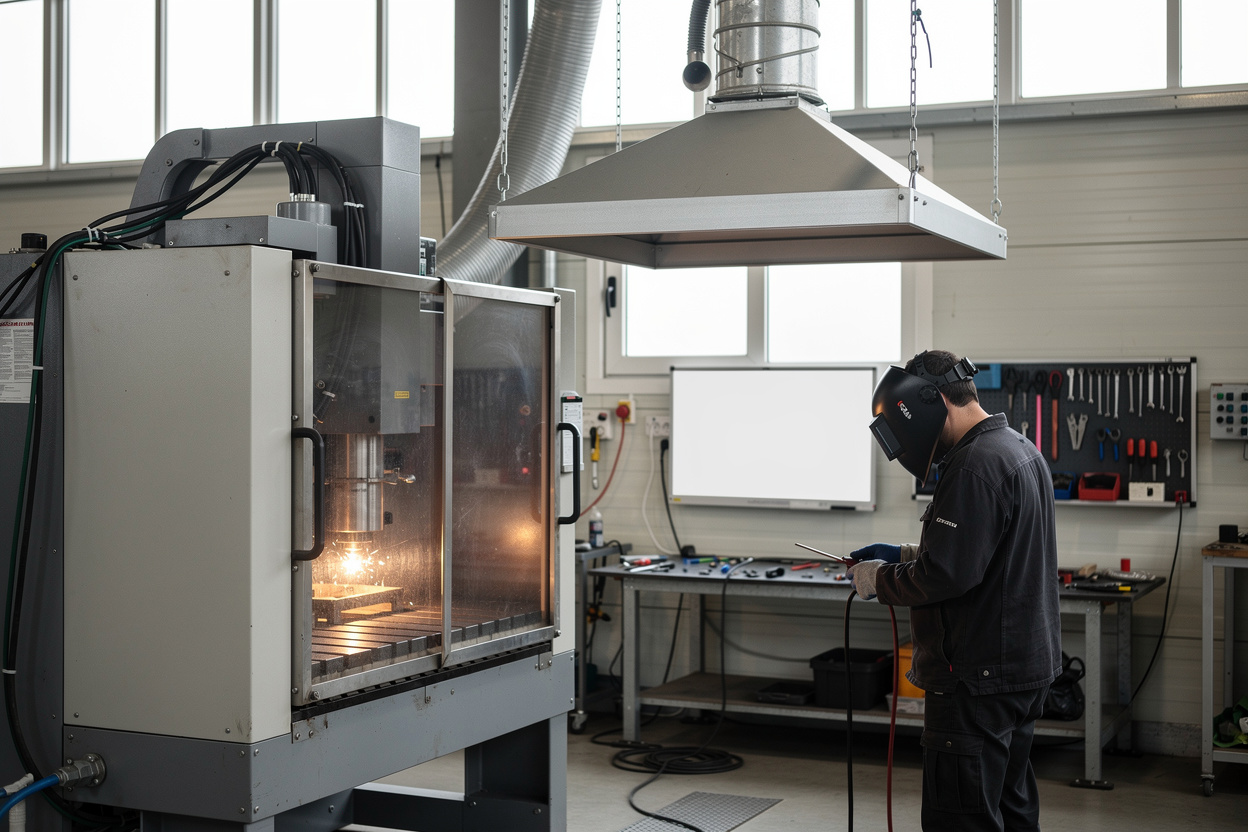
  • 3. Engineering controls: guard the dangerous parts of machines, extract fumes and dust at source with local exhaust ventilation, provide working platforms with guardrails and toe-boards.
  • 4. Administrative controls: safe systems of work, written procedures, permits to work, job rotation, training and supervision.
  • 5. Personal protective equipment: the final level, used only when the levels above are not reasonably practicable or do not control the risk completely, and wherever possible in combination with them.

Working through the hierarchy in order ensures that each control is judged on its effectiveness, and that PPE is a complement to the other controls rather than a substitute for them.

Why PPE is at the Bottom of the Hierarchy
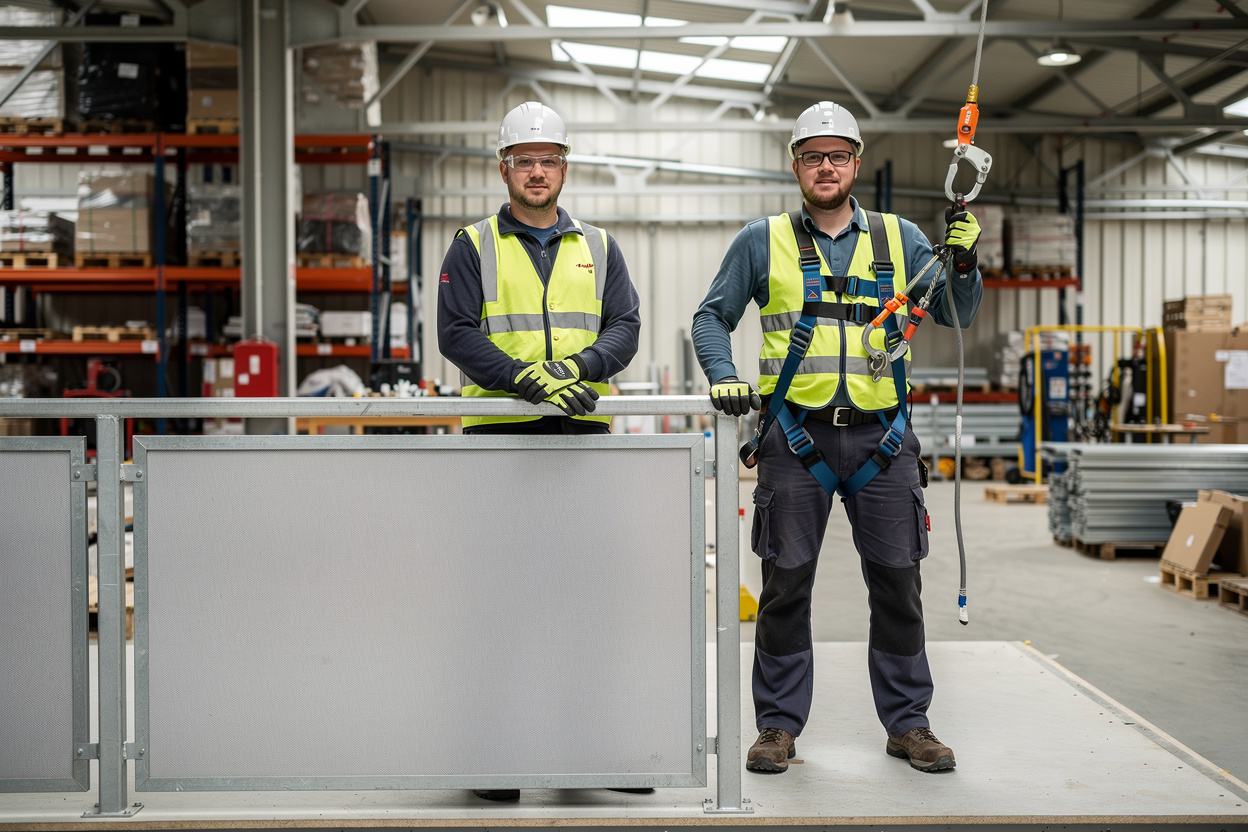
Guardrail: protects everyone, no action neededHarness: one person, only if clipped on
Why PPE is at the Bottom of the Hierarchy

There are four reasons why PPE sits at the lowest level of the hierarchy of control:

  • PPE protects only the person wearing it. If the risk is removed or controlled at source, for example by local exhaust ventilation that removes a harmful dust, everyone in the area is protected, including people who are not wearing anything.
  • PPE is only effective if it is worn correctly, all the time the risk is present. In practice many types, respirators and hearing protection above all, give far less protection than their rating because they are worn loosely, taken off for a moment, or do not fit.
  • PPE must be stored and maintained correctly to keep working. A cracked visor, a clogged filter or a harness with a worn stitch is no longer protection.
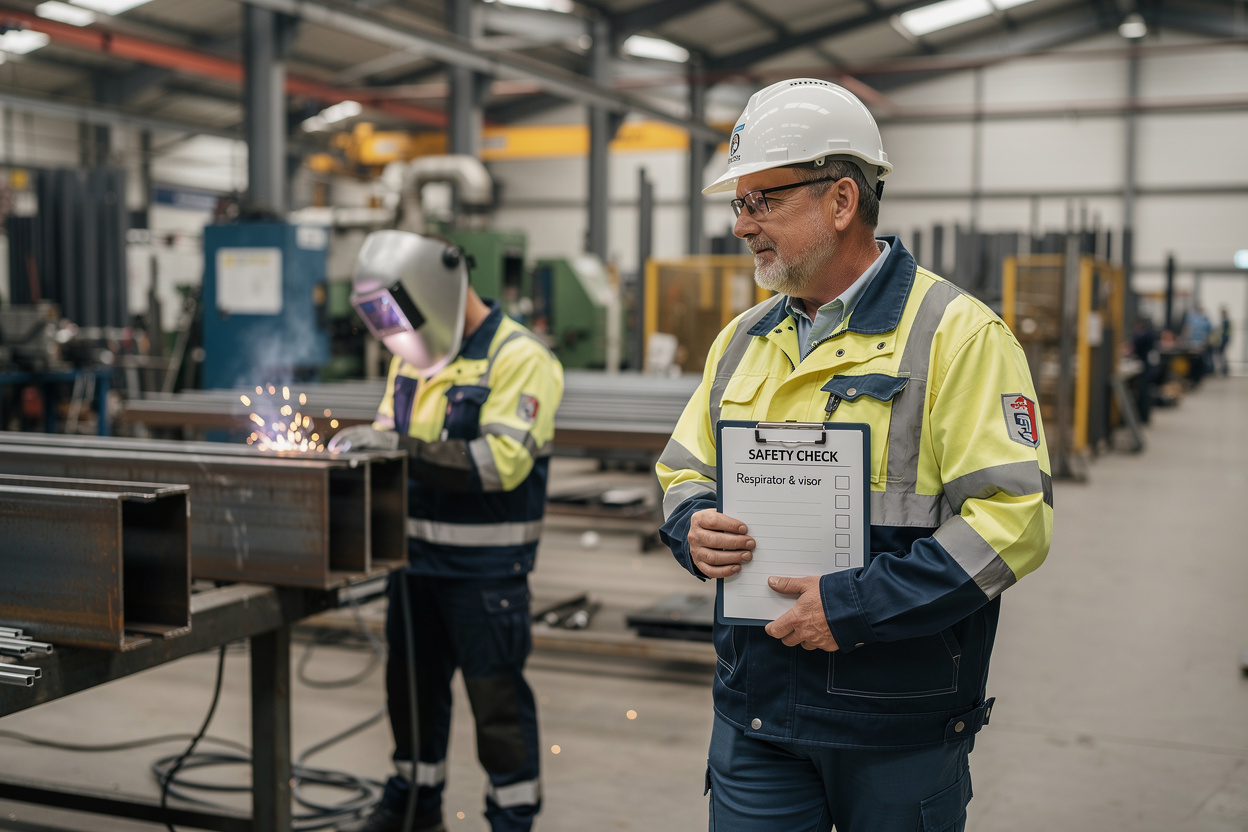
  • PPE needs a much higher level of supervision and monitoring than the other control measures, because its effectiveness depends on human behaviour every minute of the day.

Compare a harness for work at height with a guarded working platform. The harness protects one person, needs a high level of training, and fails the moment it is not clipped on; a supervisor must check constantly. The platform with guardrails and toe-boards protects everyone on it, needs no action by the user, and needs far less supervision.

Understanding 'Reasonably Practicable'
Risk vs cost, time and effortGreater risk → more must be done
Understanding 'Reasonably Practicable'

Health and safety law asks duty holders to do what is 'reasonably practicable'. That means weighing the level of risk against the cost, time and effort of the measures needed to control it, and taking the measures unless they are grossly disproportionate to the risk.

If the worst that could happen is trivial, no action is needed. Where there is any risk of real harm to health or safety, action must be taken to remove or control it until what remains is insignificant.

The duty falls on employers, and on other duty holders such as the self-employed and those who control premises. In practice it means that the great majority of risks must be controlled, and that the greater the risk, the more that must be done to control it, whatever it costs.

For PPE this has two consequences. First, PPE may only be relied on where the higher levels of the hierarchy are not reasonably practicable. Second, the PPE chosen must give adequate protection: the respirator must be right for the substance and the task, and it must fit the person who wears it. A cheap mask that does not seal is not a reasonably practicable control; it is no control at all.

The Law on PPE — an Overview
Act 2005 → GenApp Regs 2007 → EU PPE Regs 2018
The Law on PPE — an Overview

The next slides review the laws and guidance that apply to PPE. Knowing them matters for everyone. Employers and other duty holders must understand their legal duties if they are to select, use and maintain PPE properly. Employees need to know those duties too, so that they understand what their employer must do to protect them, and what their own responsibilities are for protecting themselves and others.

In Ireland the framework has three layers:

  • The Safety, Health and Welfare at Work Act 2005: the general duties of employers, the self-employed and employees.
  • The Safety, Health and Welfare at Work (General Application) Regulations 2007: risk assessment, health surveillance, and Chapter 3 of Part 2, which deals specifically with personal protective equipment, together with the Part 5 rules on noise and vibration.
  • The European Union (Personal Protective Equipment) Regulations 2018, which give effect to EU Regulation 2016/425 and set the standards that PPE placed on the market must meet, shown by the CE mark.

Other regulations, on hazardous substances, noise, asbestos, work at height and construction, add PPE requirements for particular hazards.

The Safety, Health and Welfare at Work Act 2005
So far as is reasonably practicableVisitors and contractors are covered too
The Safety, Health and Welfare at Work Act 2005

The Safety, Health and Welfare at Work Act 2005 is the foundation of health and safety law in Ireland. It requires every employer to ensure, so far as is reasonably practicable, the safety, health and welfare at work of all of their employees.

That duty is wide. It includes providing and maintaining safe systems of work, safe plant and equipment, information, instruction, training and supervision, and, specifically, providing and maintaining suitable protective clothing and equipment where risks cannot be eliminated or adequately controlled by other means. The employer must also identify hazards, assess risks and prepare a written Safety Statement based on that assessment.

Self-employed people have the same duties towards themselves and towards anyone who may be affected by their work, whether they work in construction, agriculture or any other sector.

Employers and the self-employed must also conduct their work so that people who are not their employees, such as visitors, contractors and members of the public, are not put at risk. Where a visitor enters an area where PPE is required, suitable PPE must be provided to them.

The Act — Designers, Manufacturers and Suppliers
CE mark + instructions = starting point
The Act — Designers, Manufacturers and Suppliers

The 2005 Act also places duties on the people who design, manufacture, import and supply articles for use at work, and that includes the manufacturers and suppliers of PPE.

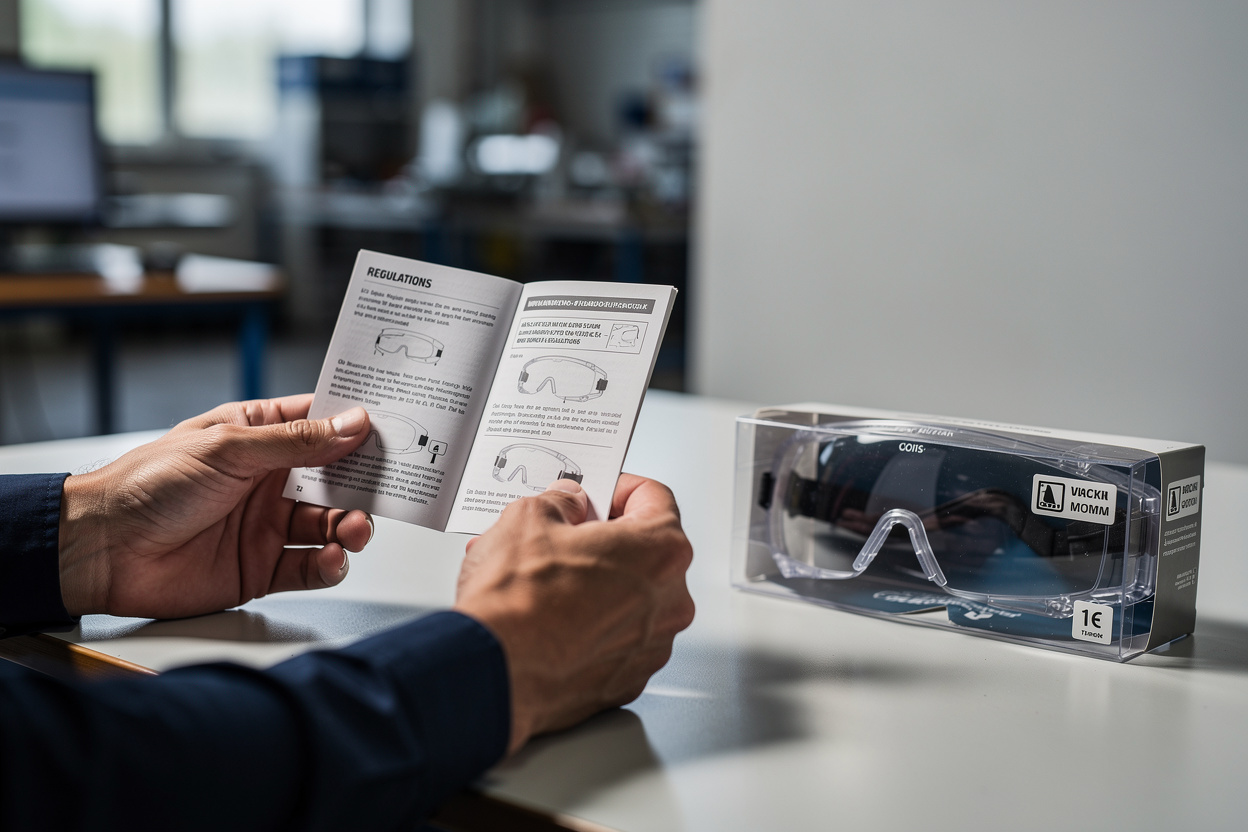
They must ensure, so far as is reasonably practicable, that the PPE is designed and constructed so that it is safe and without risk to health when properly used; that it has been tested and examined; and that it is supplied with adequate information about the use for which it is designed, the level of protection it gives, and how it should be used, cleaned, maintained and stored.

In addition, the European Union (Personal Protective Equipment) Regulations 2018 require PPE placed on the market to meet the essential health and safety requirements of EU Regulation 2016/425, to be assessed for conformity, and to carry the CE mark together with the manufacturer's instructions in a language the user can understand.

For the employer, this means that the markings and the instructions supplied with the PPE are the first thing to check: they tell you what the equipment protects against, to what level, and for how long.

The General Application Regulations 2007
Plan · organise · control · monitor · reviewPPE is rarely used properly without monitoring
The General Application Regulations 2007

The Safety, Health and Welfare at Work (General Application) Regulations 2007 apply to every workplace. Together with the 2005 Act, they require employers to identify the hazards in the workplace, assess the risks, and put in place the control measures that the assessment shows are needed. Risk assessment is the cornerstone of the whole system, and Module 2 looks in detail at the place of PPE within it.

The regulations also require employers to have effective arrangements for planning, organising, controlling, monitoring and reviewing their preventive and protective measures. For PPE this is critical: experience shows that PPE is rarely used properly unless managers and supervisors actively monitor its use.

Employers must provide health surveillance where the risk assessment shows that it is appropriate, and must give employees information about the hazards and risks of their work, the protective measures in place and what the employee must do to stay safe.

Employees, for their part, must use the equipment provided in accordance with their training and instructions, and must report to their employer any work situation they reasonably consider to be a serious and immediate danger, and any shortcoming in the protection arrangements.

The PPE Regulations — Duties of Employers
Free of charge — alwaysSuitable · fits · compatible · maintained
The PPE Regulations — Duties of Employers

Chapter 3 of Part 2 of the General Application Regulations 2007 applies to all work activities, even where other regulations also require PPE for a particular hazard. It requires every employer to ensure that PPE is:

  • Provided only where the risk cannot be adequately controlled by other means that are equally or more effective, so that PPE is used in line with the hierarchy of control and in combination with other measures.
  • Assessed before it is chosen, to make sure it is suitable for the risks, the conditions, the work and the wearer.
  • Appropriate to the risks involved without itself leading to any increased risk, and suitable for the period it must be worn.
  • A proper fit for the wearer, after any necessary adjustment, and comfortable enough to be worn for the whole time the risk is present.
  • Compatible with any other PPE that has to be worn at the same time, so that each item still gives its protection.
  • Accompanied by information, instruction and training on its use, its limitations, and how to clean, maintain and store it.
  • Actually used, with the supervision and monitoring needed to make sure of it.
  • Maintained in good repair and efficient working order, and replaced when necessary.
  • Properly stored when not in use, in clean, dry accommodation.
  • Provided free of charge to employees. The cost of PPE can never be passed on to the worker.
The PPE Regulations — Duties of Employees
Use it · look after it · report defects
The PPE Regulations — Duties of Employees

The same regulations place duties on every employee and every worker who is provided with PPE. You must:

  • Use the PPE provided correctly, in accordance with the training and instructions you have been given, every time the risk is present.
  • Take reasonable care of the PPE, and return it to the storage provided after use, so that it stays clean, dry and in good condition.
  • Report any loss of PPE, and any defect or damage you notice, to your employer immediately, so that it can be repaired or replaced before it is needed again.
  • Attend the training provided and take part in fit testing or health surveillance where it is required.
  • Never interfere with, alter or misuse PPE, and never remove it while you are exposed to the hazard.

These duties apply at every level, including to the managers and supervisors who oversee the work. This course shows how they are met in practice: how to put PPE on, how to check it, when to replace it and where to keep it.

Employee Responsibilities Under Health and Safety Law

Once the employer has met their responsibilities, every employee must play their part in keeping the workplace safe. These responsibilities apply to employees at every level, including those who manage and supervise work, and a good system of work builds in regular monitoring of PPE use. Under the general law:

  • Every employee must take reasonable care of their own health and safety, and of the health and safety of anyone else who may be affected by what they do or fail to do at work.
  • Employees must cooperate with their employer and follow the safe systems of work, procedures and training provided.
  • Employees must not intentionally or recklessly interfere with or misuse anything provided for health and safety, including PPE.
  • Employees must report to their employer any risk to health and safety they become aware of, any defect in equipment, and any work situation they believe is dangerous.
  • Employees, including casual and temporary workers, must use PPE as they have been trained and instructed, and must store it properly after use.

A worker who follows these rules protects not only themselves but the people around them, and gives the employer the information needed to keep the controls working.

Summary

In this module you have learnt that:

PPE is the equipment worn or held to protect a person against risks to their health or safety at work, from safety helmets and eye protection to respirators, hearing protection, gloves, safety footwear, harnesses and life jackets.

The hierarchy of control runs from elimination, through substitution, engineering and administrative controls, to PPE last. PPE protects only the wearer, only when worn correctly, and needs far more supervision than any other control.

The Safety, Health and Welfare at Work Act 2005, the General Application Regulations 2007 and the EU PPE Regulations 2018 set the duties: employers must assess, select, provide free of charge, maintain and monitor PPE; manufacturers must supply CE-marked PPE with proper information.

Employees, including casual and temporary workers, must use PPE as trained, look after it, store it properly and report any loss or defect at once. In the next module we look at the risk assessment that decides which PPE is needed, and how to select and provide it.

Knowledge Check
Where does personal protective equipment sit in the hierarchy of control?
Select one answer, then press Check.
At the top: it should be considered before any other control
In the middle, alongside engineering controls
At the bottom: it is the last resort, used when other controls are not reasonably practicable
Outside the hierarchy: it is always required whatever the other controls
Correct — well done. You can continue.
Not quite. Think about what you have just learnt in this module, and try again.
Get the full course →Answer the question to unlock the next module.
Page 1 of 19