← Exit
Module 1 · The Primary Survey0% complete · 16 slides left
First Aid
First Aid
Module 1
This course contains audio. Use headphones in public places.
Introduction
Introduction

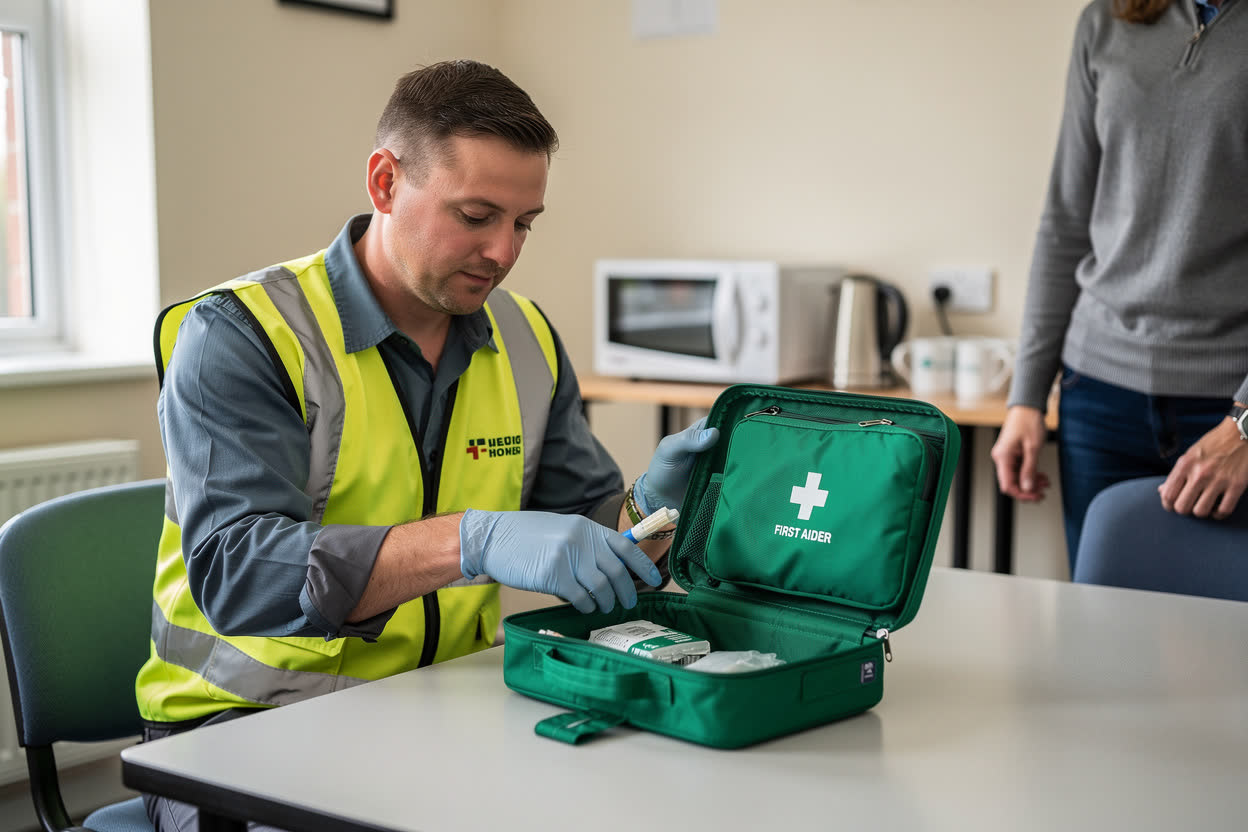
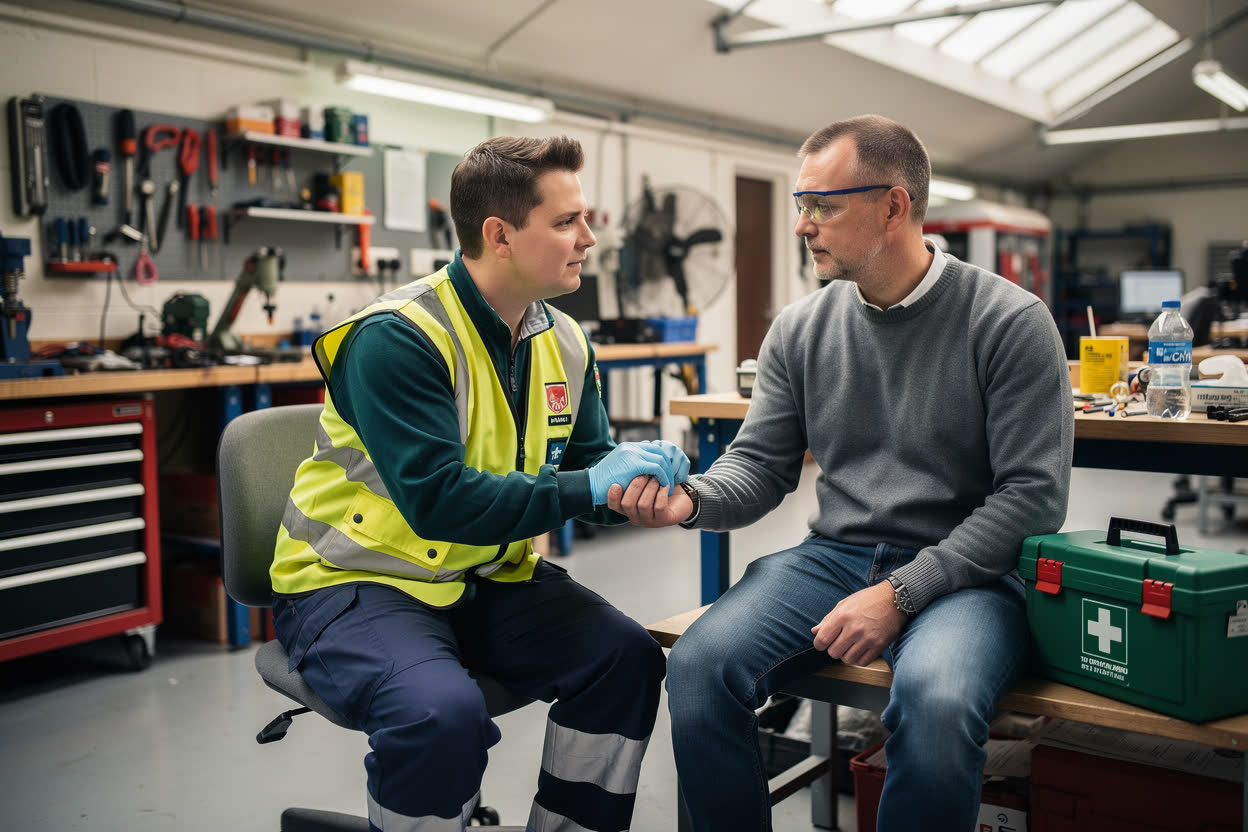
This course gives you the knowledge to help a colleague who is injured or suddenly becomes ill at work, whether you are new to first aid or refreshing what you already know. You will learn how to manage medical emergencies, how to act with confidence, and when to call for professional help.

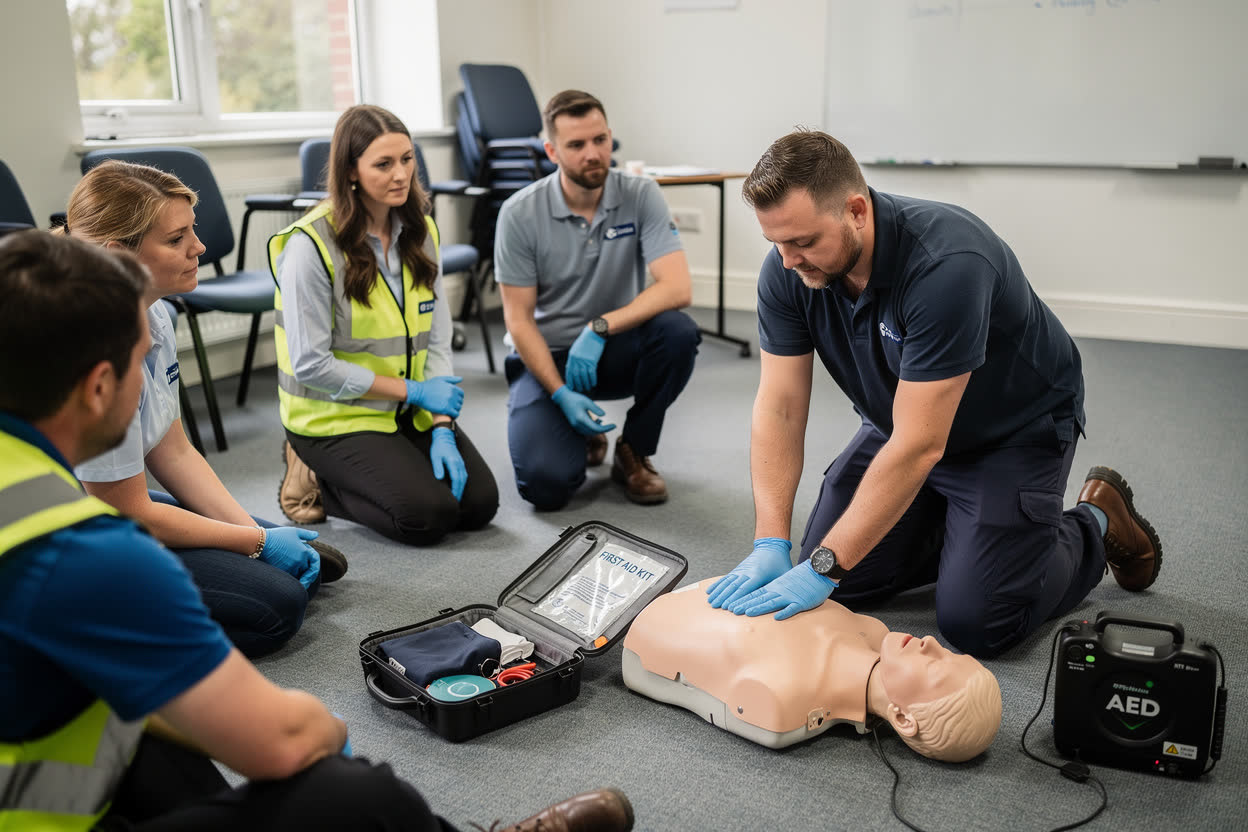
Please note: this online course gives you the theory of first aid. It does not replace certified practical first aid training. To become an occupational first-aider in Ireland, you must complete practical training approved by the Pre-Hospital Emergency Care Council, or PHECC, to the First Aid Response standard or higher.
Course Aims
Course Aims

By the end of this course, you will be able to:

  • Describe the first aid duties of employers under Irish health and safety law.
  • Carry out a primary and a secondary survey of a casualty.
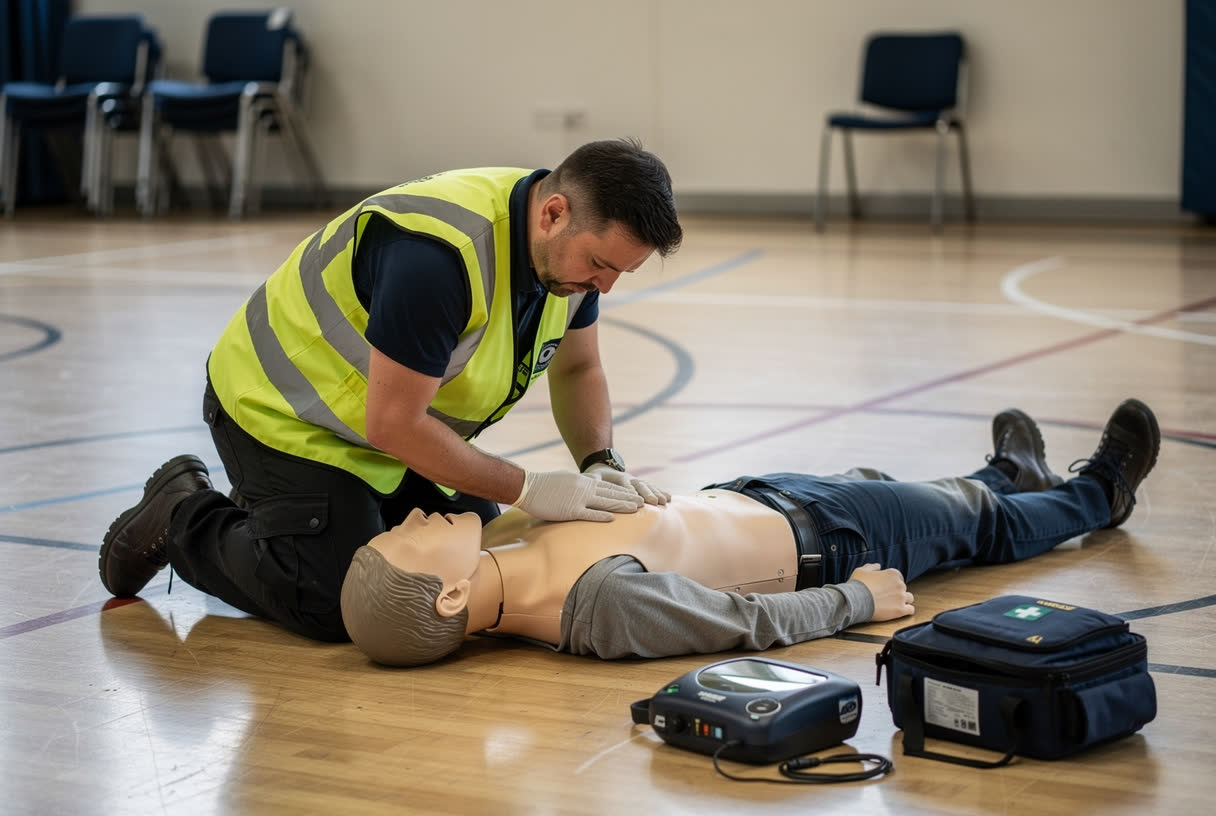
  • Give CPR, use a defibrillator, and place a casualty in the recovery position.
  • Deal with choking, wounds, bleeding, shock, burns, eye and head injuries, fractures and spinal injuries.
  • Help someone with asthma, anaphylaxis, diabetes, epilepsy, a heart attack or a stroke.
  • Deal with fainting, hyperventilation, nosebleeds, sprains, poisoning and drowning.
  • Record and report incidents correctly.
The Aims of First Aid

First aid is the immediate help given to someone who is injured or ill, until professional medical help arrives or the person recovers. It has three aims:

  • To preserve life.
  • To prevent the condition from getting worse.
  • To promote recovery.

Everything you learn in this course serves these three aims. First aid also means protecting yourself: a first-aider who becomes a second casualty cannot help anyone.

Why First Aid Matters

The Health and Safety Authority, or HSA, publishes statistics on work-related accidents in Ireland every year. For 2025, the Authority reported that:

  • 58 people died in work-related incidents, a sharp rise on the year before.
  • This was a rate of about 2.1 deaths for every 100,000 workers.
  • Agriculture accounted for 23 of the deaths, about 40 per cent of the total.

Quick, correct first aid can make the difference between life and death, and between a short and a long recovery.

First Aid and the Law

The Safety, Health and Welfare at Work Act 2005, and Chapter 2 of Part 7 of the Safety, Health and Welfare at Work (General Application) Regulations 2007, require employers to provide adequate and appropriate first aid equipment, facilities and occupational first-aiders.

What is adequate and appropriate depends on the hazards of the workplace. The employer decides this through the risk assessment, which forms part of the Safety Statement. The minimum is:

  • A suitably stocked first aid kit.
  • Enough trained occupational first-aiders for the risks, where the assessment shows they are needed.
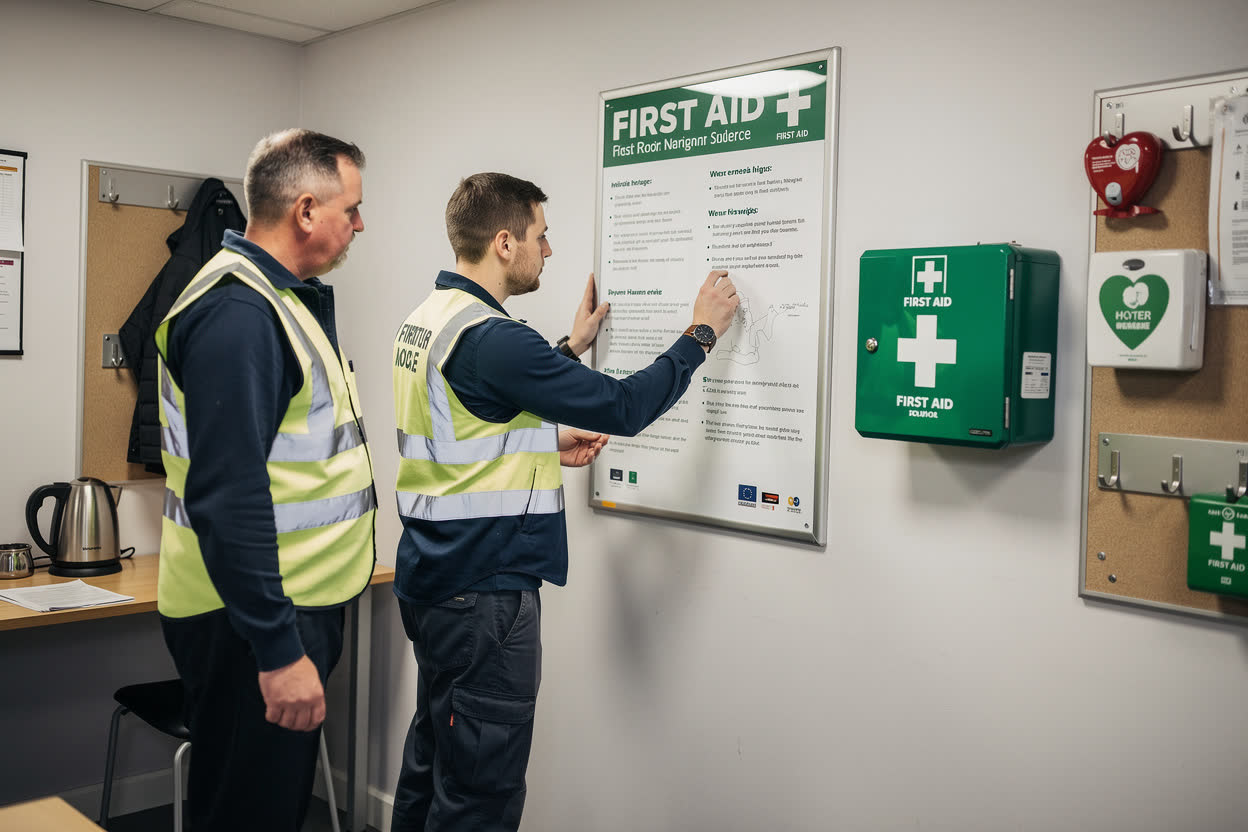
  • Information for employees about the first aid arrangements.
Deciding What Is Needed

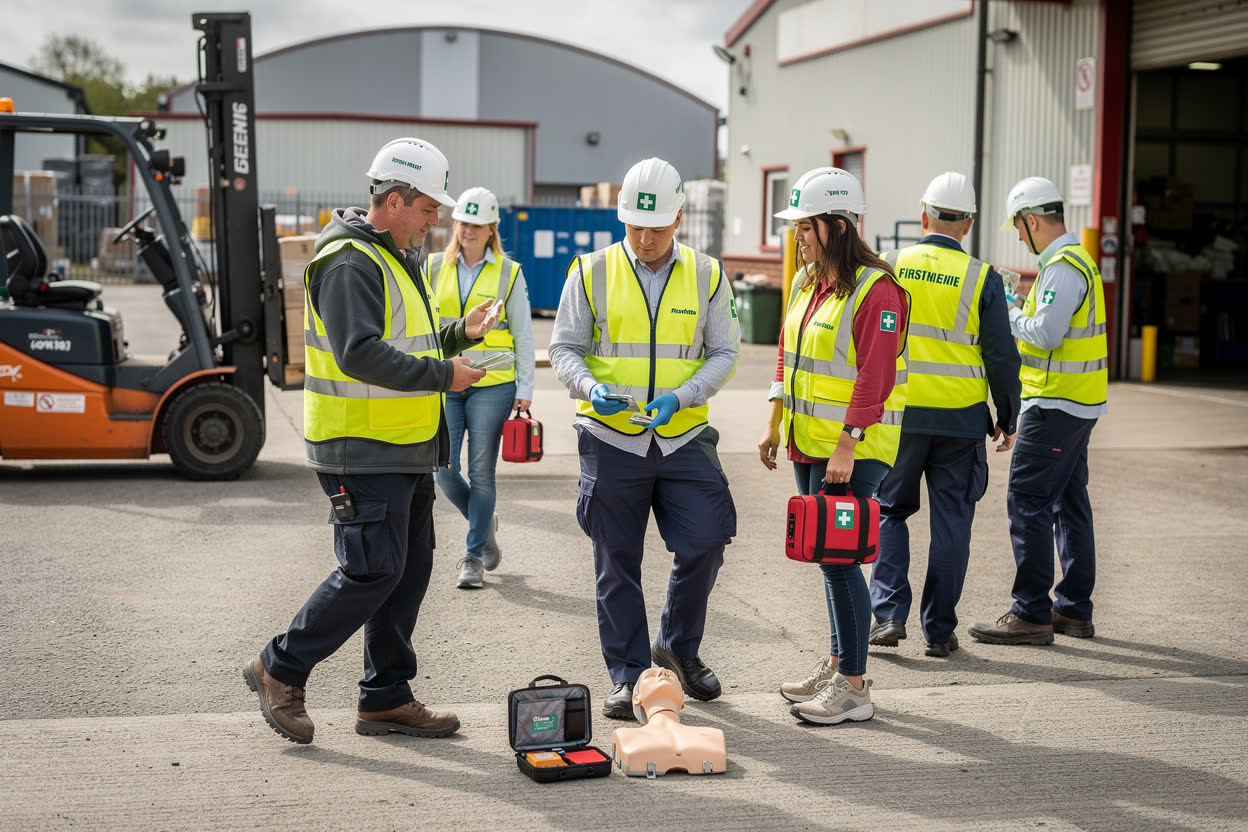
In a small, low-risk workplace, such as an office or shop, a first aid kit and a designated occupational first-aider may be enough. Their role includes calling the emergency services, looking after the equipment, keeping supplies stocked, and giving first aid.

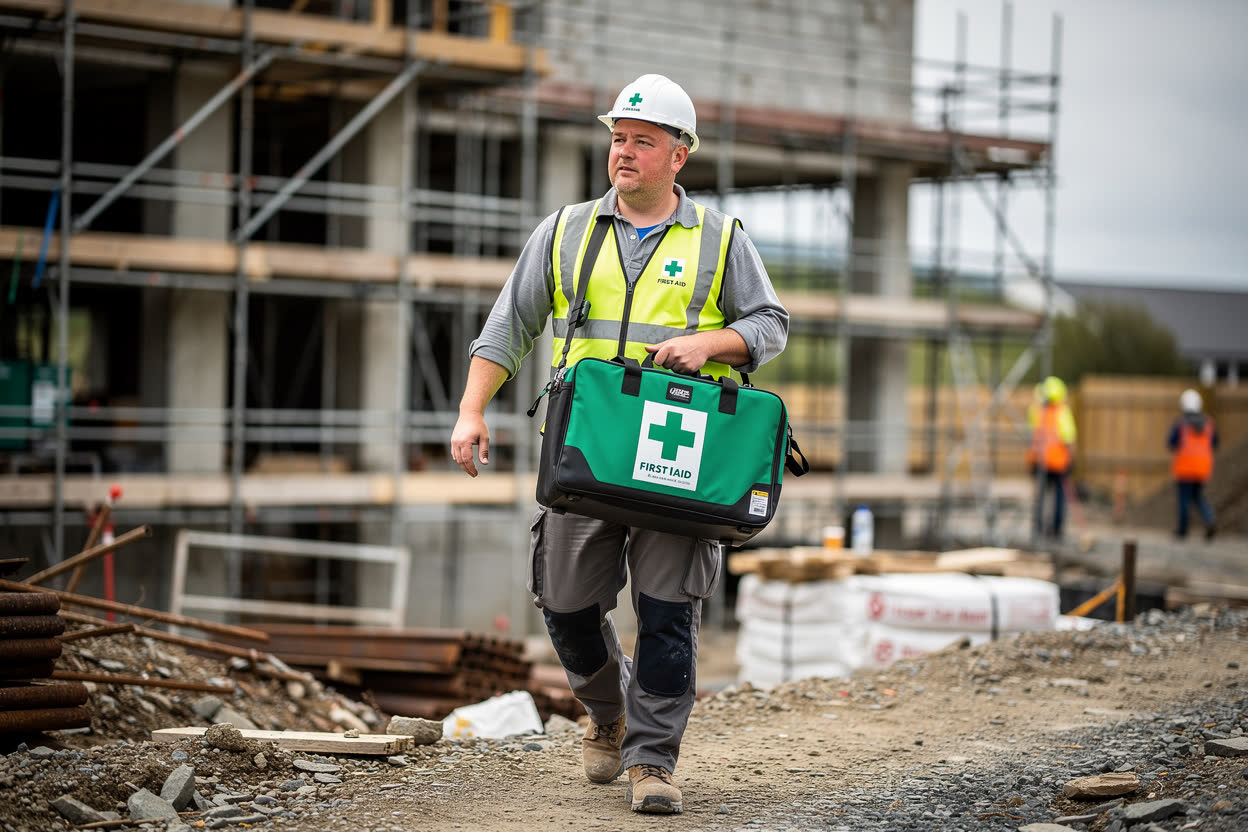
Higher-risk workplaces, such as construction sites, farms and factories, need more: several occupational first-aiders with current certificates, and sometimes specialist equipment. First aid cover must include every shift, and every employee must know where the kit is and how to reach a first-aider.

First Aid Kit Contents

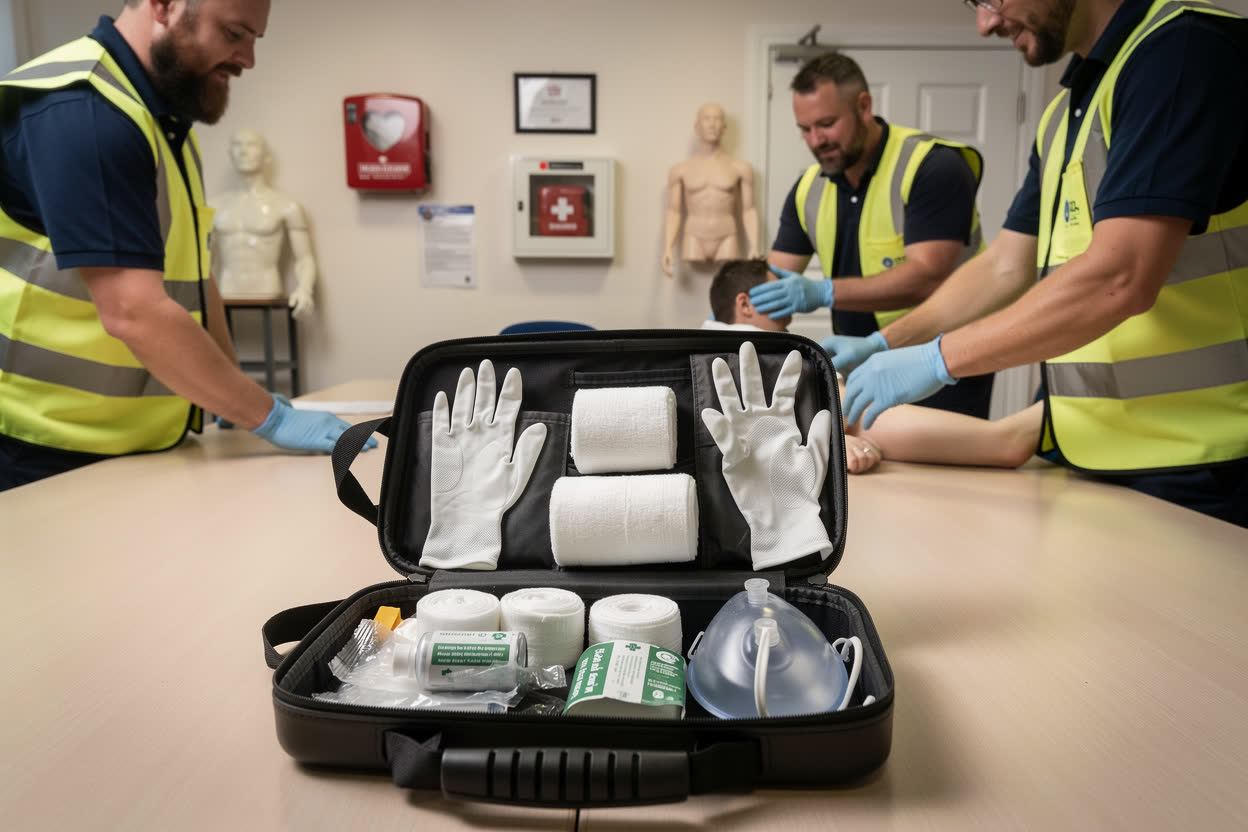
There is no fixed legal list. The contents should be based on your risk assessment, following HSA guidance. A typical kit includes:

  • Sterile dressings, plasters and wound dressings in different sizes.
  • Roller and triangular bandages.
  • Disposable nitrile gloves.
  • A face shield or pocket mask for rescue breaths.
  • Alcohol-free cleansing wipes and gauze pads.
  • Adhesive tape, safety pins, scissors and tweezers.
  • Burn dressings, or cling film for covering burns.

Check the kit regularly, and replace anything used or out of date.

The Primary Survey
The Primary Survey

When you find someone who is injured or unwell, first look for anything that could kill them in the next few minutes. This quick check is called the primary survey.

Use the letters D R A B to remember the four steps, always in this order:

  • Danger.
  • Response.
  • Airway.
  • Breathing.

Each step is explained on the following slides.

Step 1: Danger
Step 1: Danger

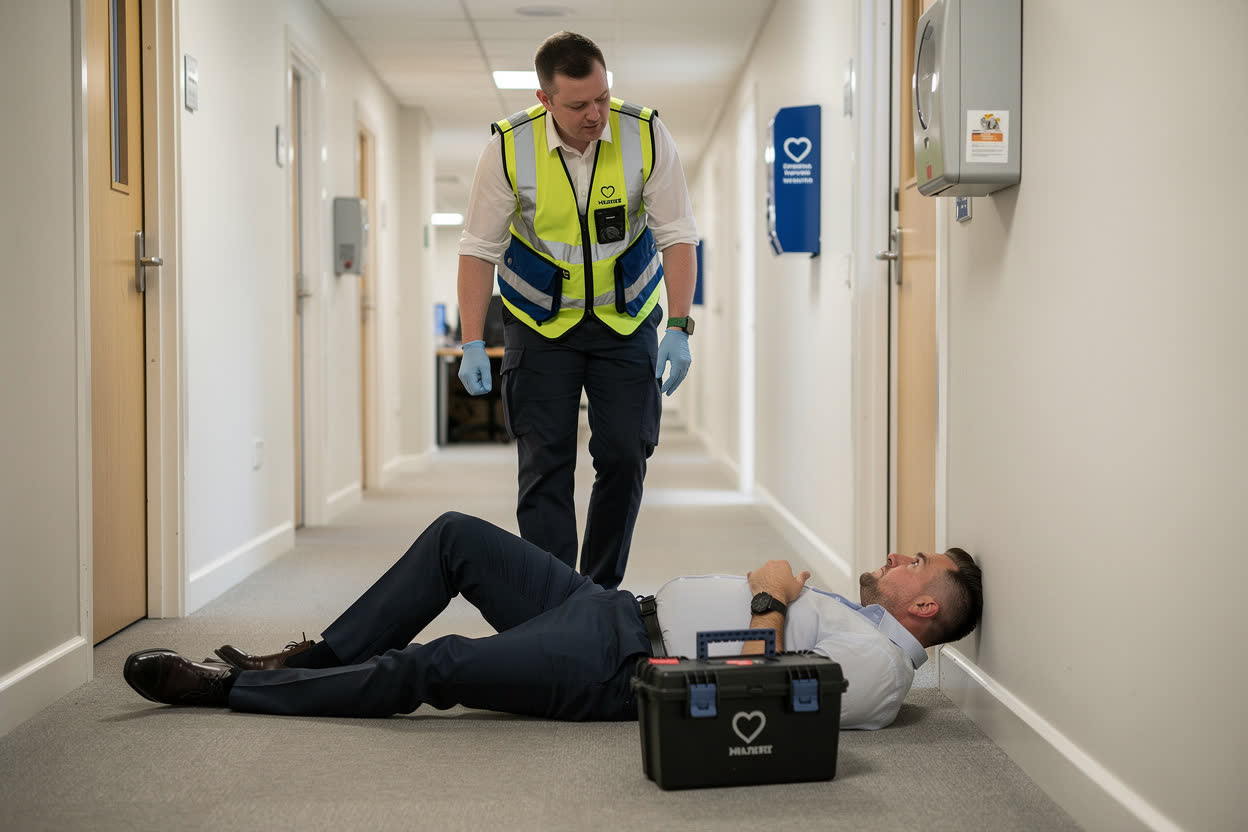
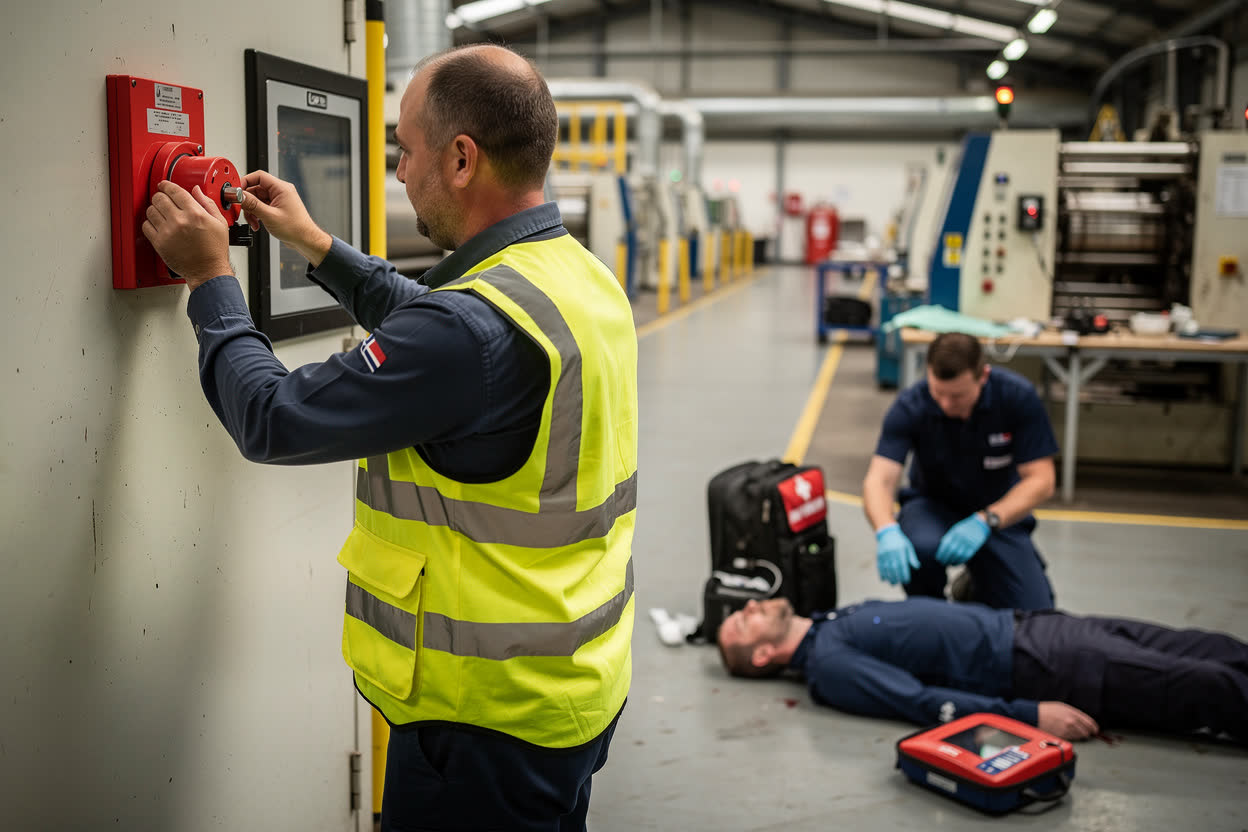
Before you go near the casualty, check that it is safe for you, for them and for anyone else nearby. Look for traffic, electricity, chemicals, fire, falling objects or broken glass.

If there is a danger, make the area safe if you can, for example by switching off the power. If you cannot, keep back and wait for the emergency services. Never put yourself at risk.

If in doubt, call 112 or 999 straight away. Both numbers reach the ambulance, the Gardaí, the fire service and the Coast Guard.

Step 2: Response
Step 2: Response

Next, check whether the casualty responds. Kneel beside them and speak loudly and clearly: ask, "Can you hear me?" or "Open your eyes."

If they do not respond to your voice, gently tap or shake their shoulders. Never shake them roughly, because they may have a neck or spinal injury.

If they answer, move or open their eyes, they are responsive. If there is no response, shout for help, but stay with the casualty and move on to the airway.

Step 3: Airway
Step 3: Airway

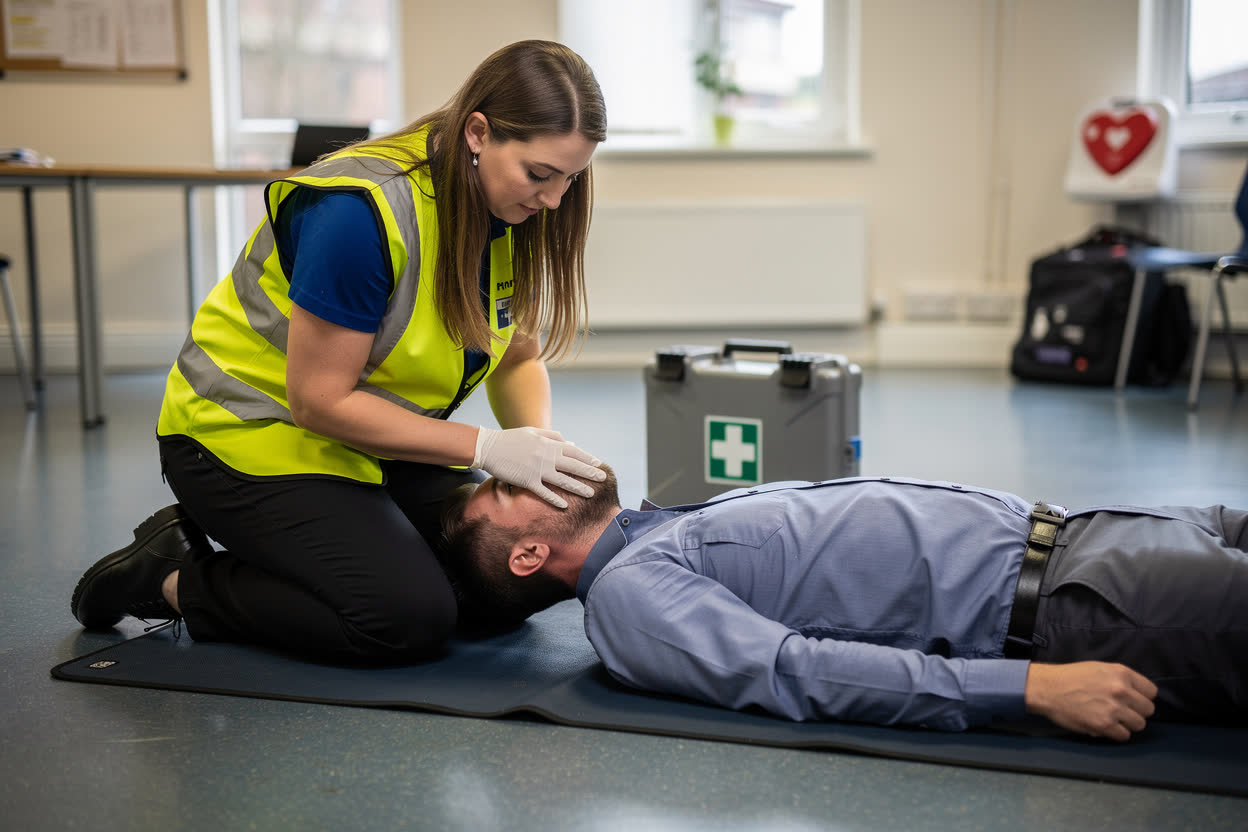
An unresponsive casualty can easily lose their airway, because the tongue can fall back and block the throat. To open the airway:

  • Place one hand on their forehead, and gently tilt the head back.
  • Place two fingertips under the point of the chin, and lift the chin.
  • Look in the mouth, and remove anything obvious only if you can do it easily.

If the casualty is responsive, check that they can speak and breathe freely.

Step 4: Breathing
Step 4: Breathing

Keep the airway open, and check for normal breathing for no more than 10 seconds. Look for the chest rising and falling, and listen for breath sounds.

  • If they are breathing normally, but are unresponsive, place them in the recovery position, which is covered in the next module.
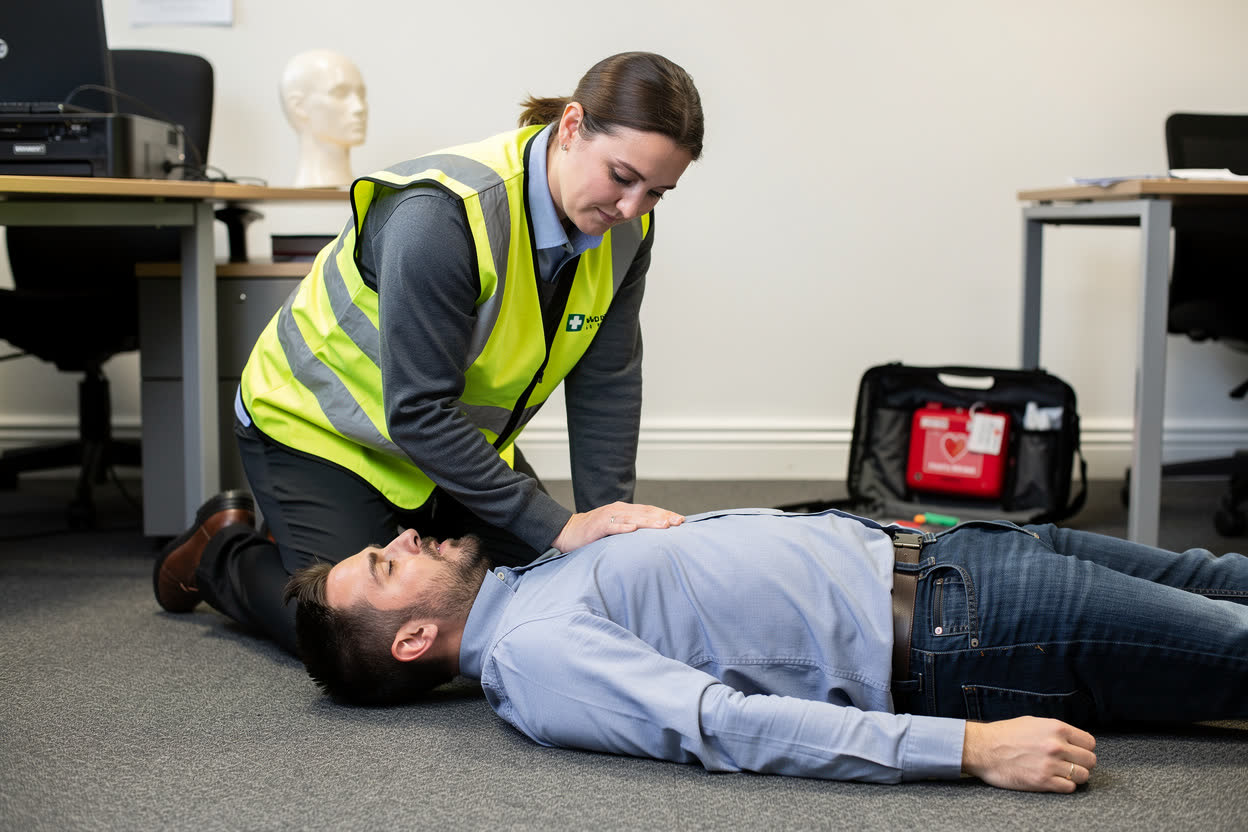
  • If they are not breathing, or not breathing normally, call 112 or 999 for an ambulance straight away, and start CPR.

Occasional gasps are not normal breathing. Treat them as a sign of cardiac arrest.

Calling the Emergency Services

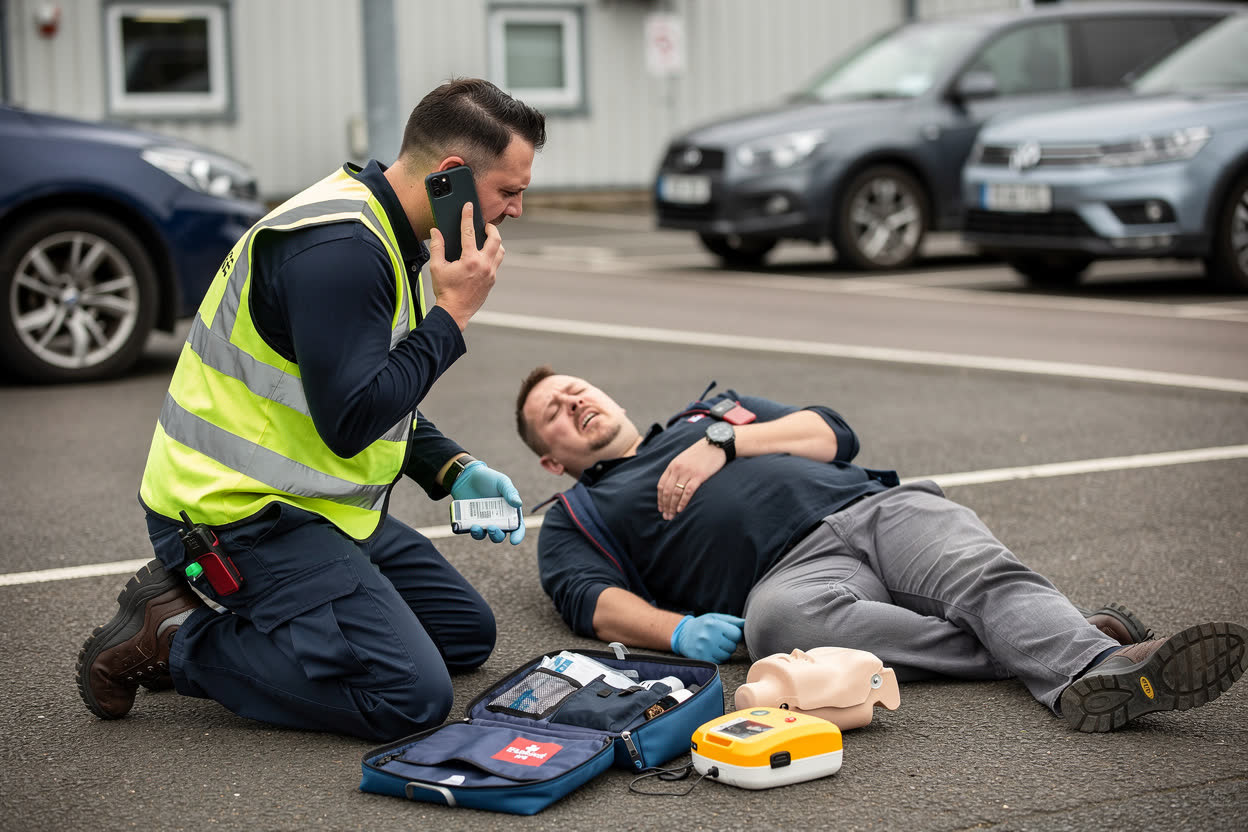
If you can, send a helper to call, and to bring a defibrillator. If you are alone, use the speaker on your phone so that you can stay with the casualty.

Stay calm and tell the call-taker:

  • Exactly where you are, including the Eircode if you know it.
  • What has happened, and how many people are hurt.
  • The casualty’s condition, especially whether they are breathing.

Do not hang up until the call-taker tells you to. Ask someone to meet the ambulance and guide the crew in.

Primary Survey: An Example

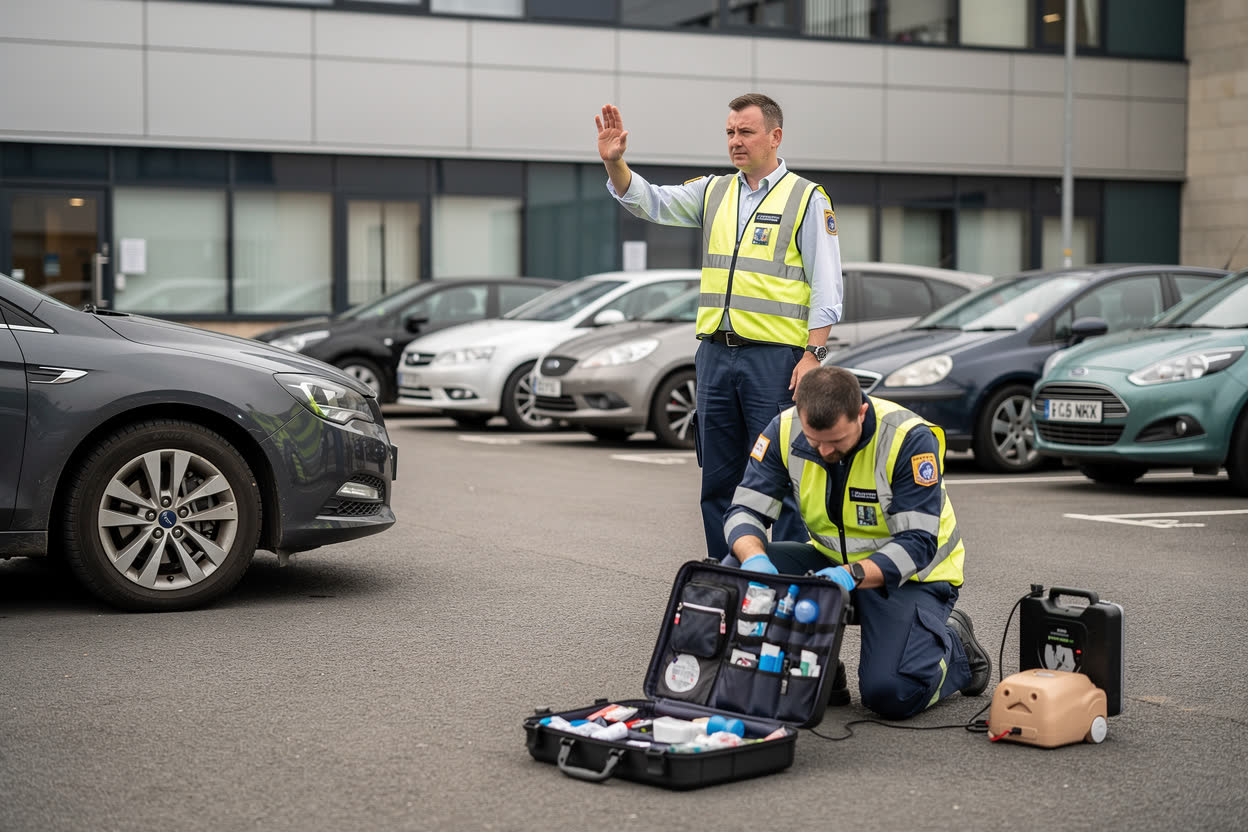
You find a colleague lying unconscious and bleeding in the staff car park. Work through the steps in order:

  • Danger: check for moving vehicles, and ask a colleague to stop the traffic.
  • Response: speak loudly, then gently tap the shoulders. There is no response.
  • Airway: open the airway with a head tilt and chin lift, taking care with the neck.
  • Breathing: check for up to 10 seconds. If they are not breathing normally, call 112 or 999, or send someone to call, and start CPR.

If they are breathing normally, move on to the secondary survey.

Summary

In this module, you have learned that:

The General Application Regulations 2007 require employers to provide adequate first aid equipment, facilities and occupational first-aiders, based on risk assessment.

The primary survey looks for life-threatening problems, using D R A B: Danger, Response, Airway and Breathing.

If a casualty is unresponsive and not breathing normally, call 112 or 999 straight away and start CPR.

In the next module, we will look at the secondary survey, the recovery position, choking, bleeding and shock.

Knowledge Check
What is the first step of the primary survey?
Select one answer, then press Check.
Response
Danger
Airway
Breathing
Correct. Always check for danger first, so that you do not become a casualty yourself.
Not quite. Before you touch the casualty, you must make sure it is safe to approach. Try again.
Get the full course →Answer the question to unlock the next module.
Page 1 of 17