← Exit
Module 1 · Fire and Fire Extinguishers0% complete · 14 slides left
Fire Extinguisher
Fire Extinguisher
Module 1
This course contains audio. Use headphones in public places.
Introduction
Introduction

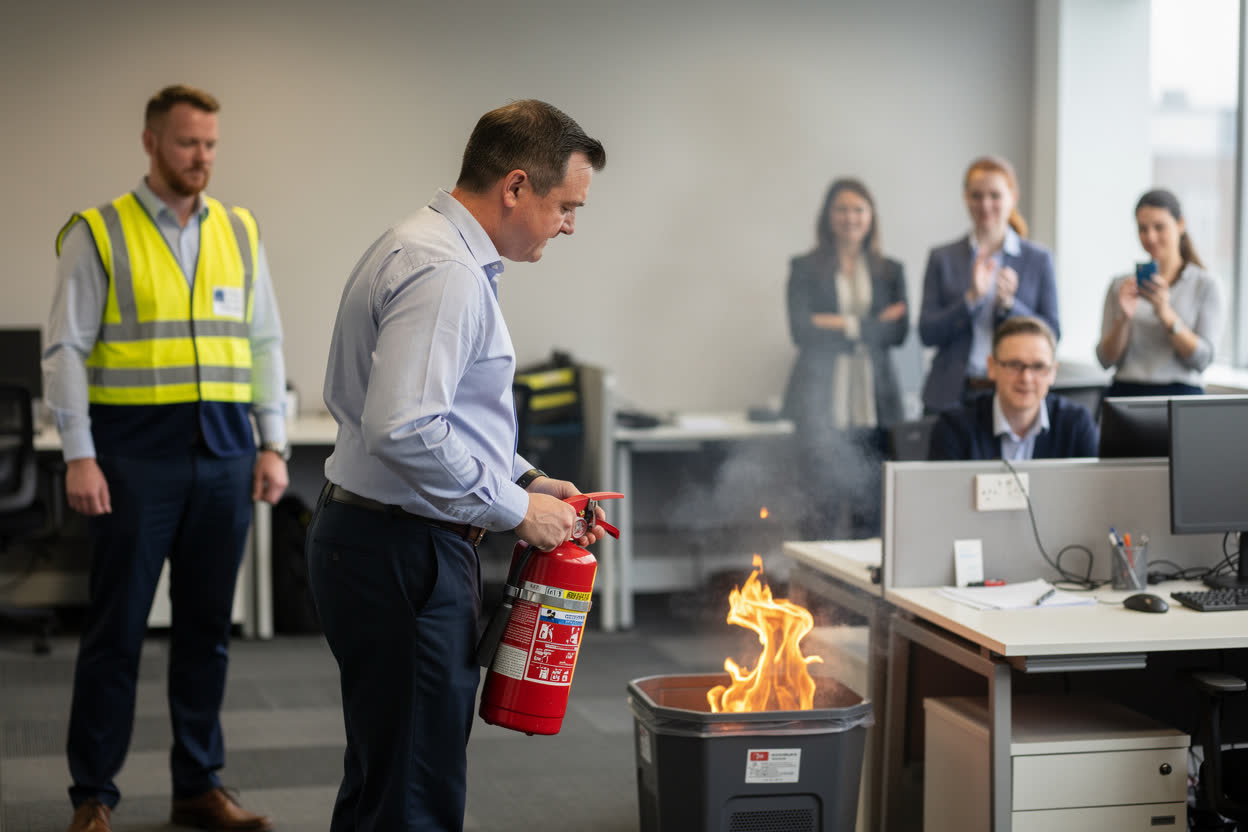
A fire extinguisher can stop a small fire from becoming a disaster. In the first minute, a fire may be no bigger than a waste paper bin. A few minutes later, it can fill a room with smoke and spread beyond control.

But an extinguisher is only useful in the hands of someone who knows which one to use, when it is safe to use it, and how to use it properly. The wrong extinguisher, or the right one used badly, can make a fire worse and put lives at risk.

This course gives you that knowledge.
Who This Course Is For

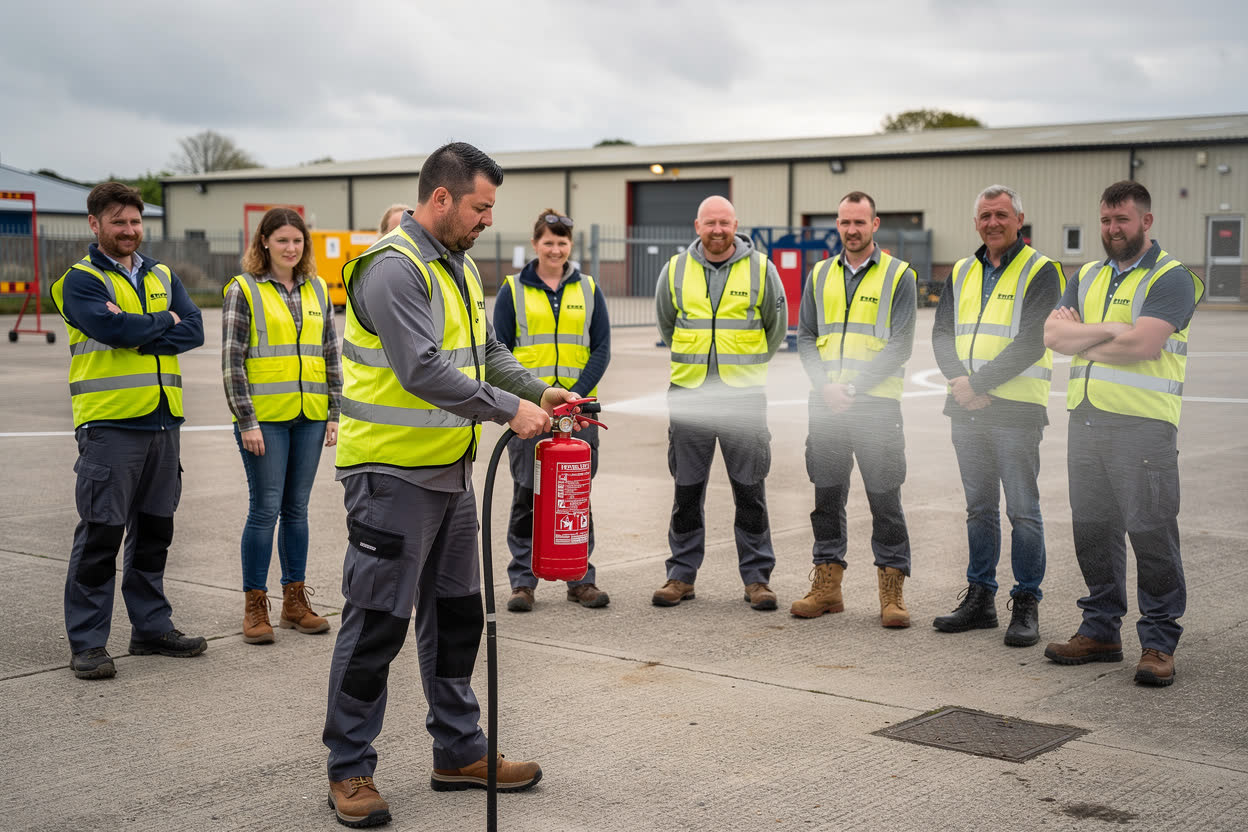
This course is designed for fire wardens, fire marshals and anyone who may be expected to use a fire extinguisher at work. It is also useful for anyone who wants to understand fire extinguishers and use them safely.

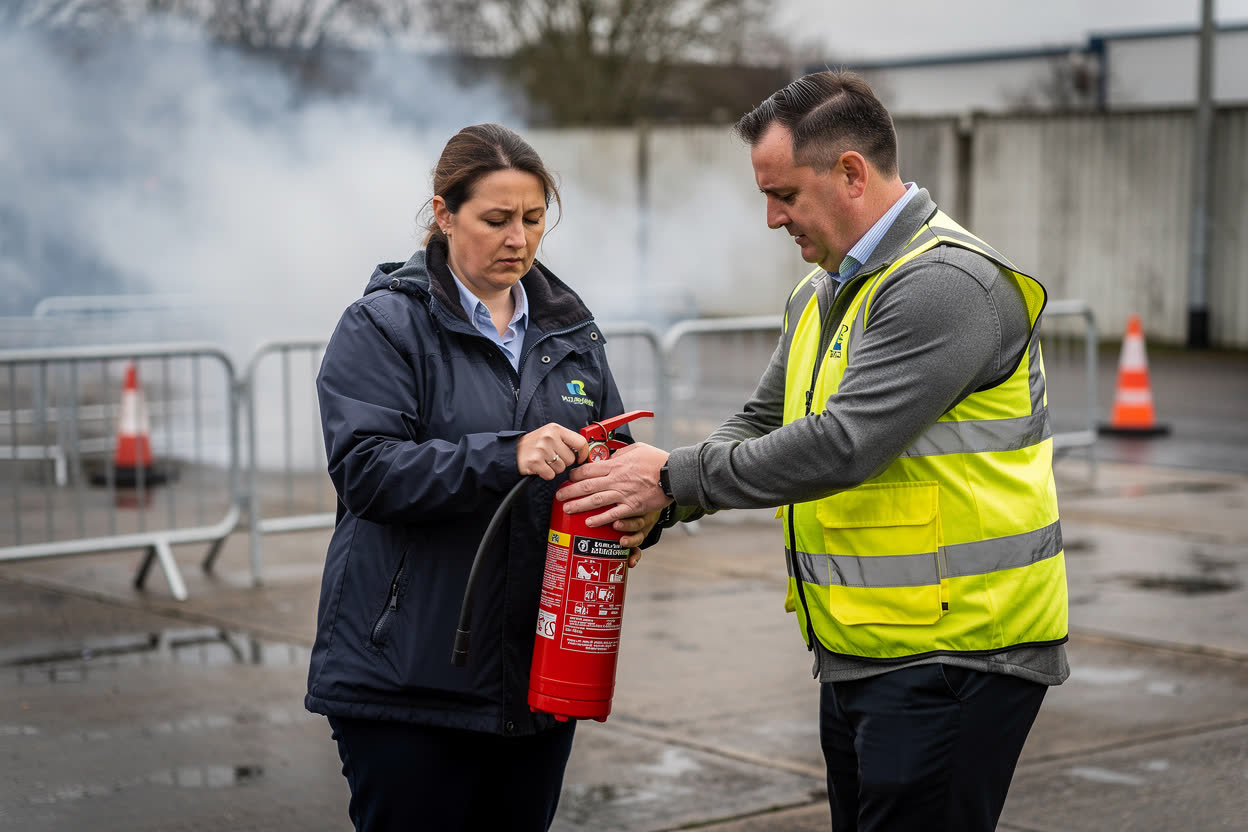
It covers the knowledge you need. Your employer should also give you hands-on practice with real extinguishers, so that you know how they feel and sound when they are discharged.

Remember: nobody is ever required to put themselves in danger to fight a fire. Your safety always comes first.

Course Aims
Course Aims

By the end of this course you will be able to:

  • Explain the fire triangle, and the classes of fire.
  • Identify the different types of fire extinguisher, and the fires each one is used on.
  • Decide whether it is safe to tackle a fire.
  • Use fire extinguishers and fire blankets safely and effectively.
  • Know what to do if a fire cannot be put out.
In This Module
In This Module

In this module you will learn about:

  • Why fire extinguisher training matters.
  • The fire triangle.
  • The classes of fire.
  • The types of fire extinguisher, and their colour codes.
  • How many extinguishers a workplace needs, and where they go.
Why Training Matters

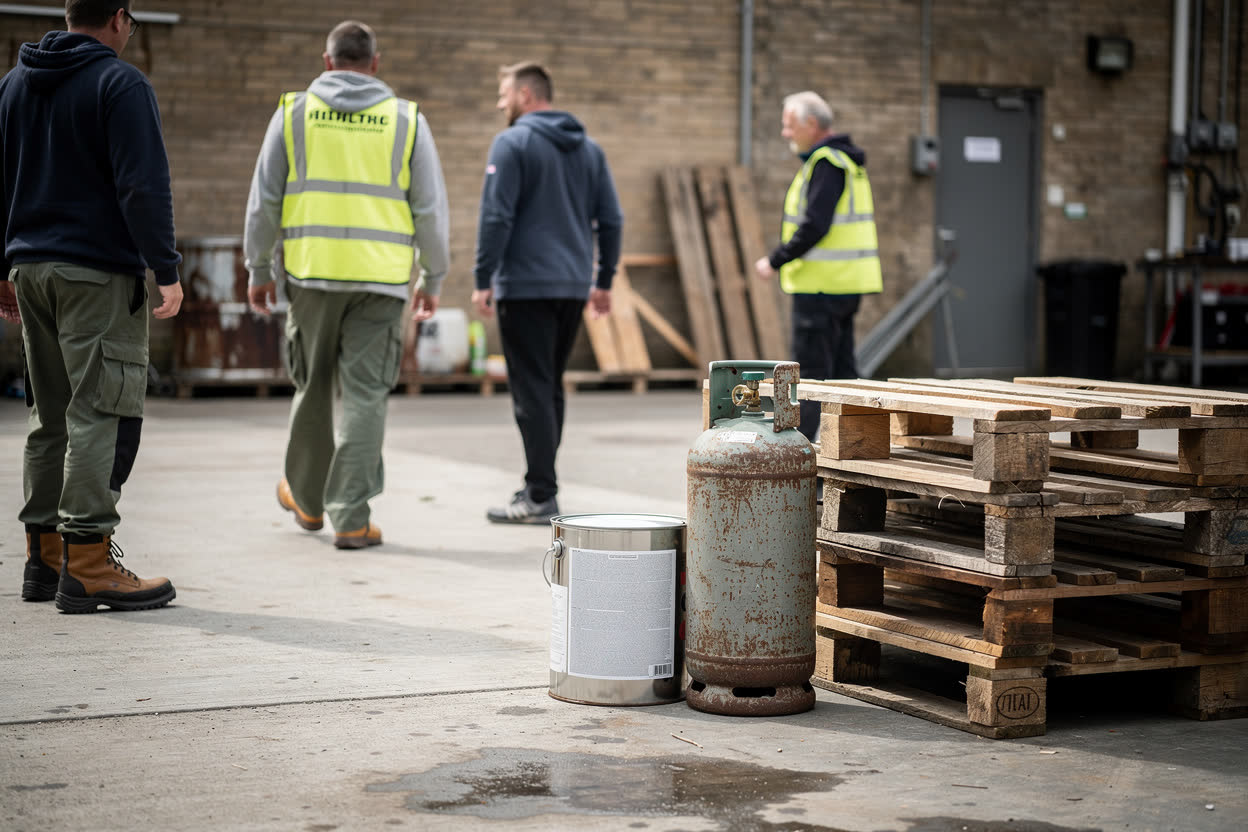
Many people have never used a fire extinguisher. In a real fire, with noise, smoke and panic, they may:

  • Pick up the wrong extinguisher, for example water for an electrical fire.
  • Stand too close, or aim at the flames instead of the base of the fire.
  • Carry on too long, and become trapped as the fire spreads.
  • Delay raising the alarm while they try to deal with the fire alone.

The Safety, Health and Welfare at Work Act 2005 requires employers to appoint and train people to carry out fire fighting and evacuation.

The Fire Triangle
The Fire Triangle

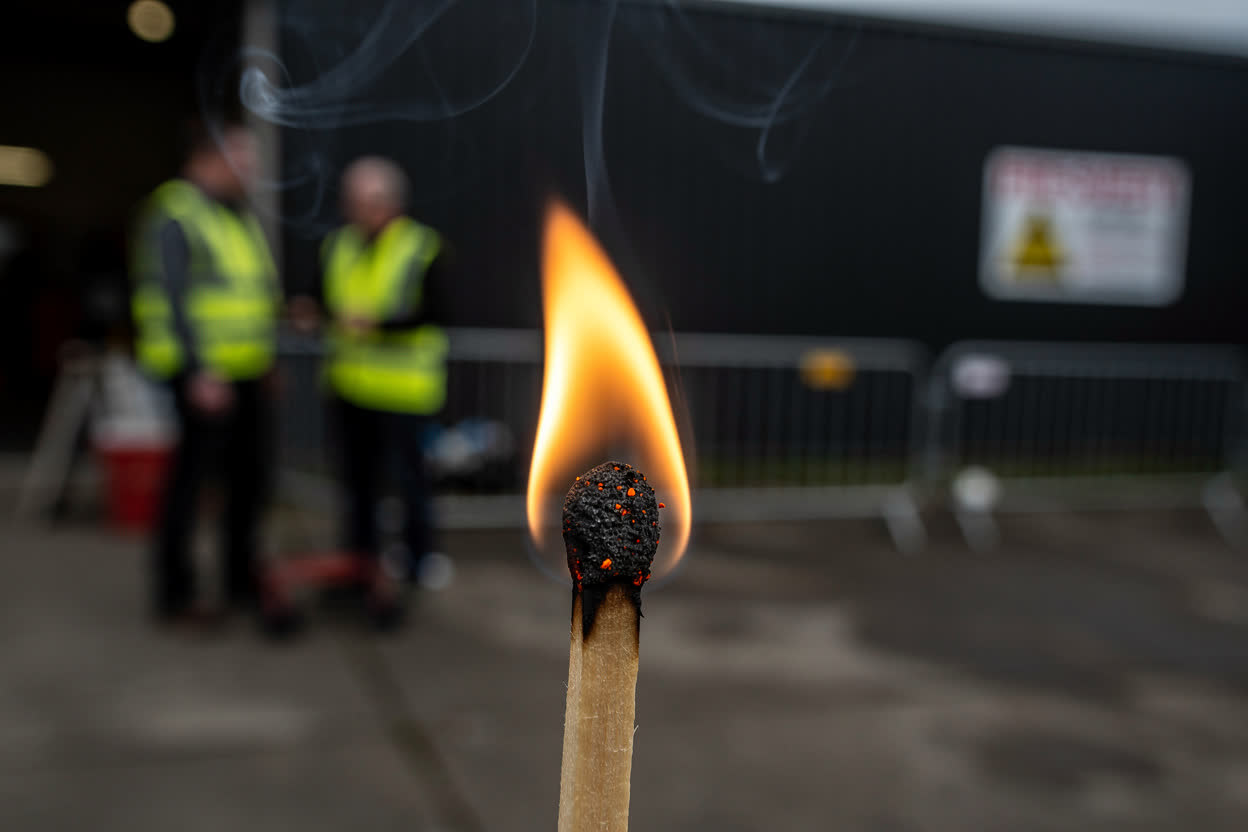
Every fire needs three things: heat, fuel and oxygen. Together they are called the fire triangle.

Fire extinguishers work by removing one side of the triangle:

  • Water cools the burning material, removing the heat.
  • Foam and wet chemical form a layer over the fuel, cutting off the oxygen and stopping vapour escaping.
  • Carbon dioxide pushes away the oxygen around the fire.
  • Powder interrupts the chemical reaction of the fire, and smothers it.
The Classes of Fire
The Classes of Fire

Fires are grouped into classes by the fuel that is burning:

  • Class A: solid materials, such as paper, wood, textiles and many plastics.
  • Class B: flammable liquids, such as petrol, oil, paints and solvents.
  • Class C: flammable gases, such as propane, butane and natural gas.
  • Class D: burning metals, such as magnesium, aluminium and lithium.
  • Class F: cooking oils and fats.

Electrical fires are not a class of their own, because electricity is a source of ignition, not a fuel. But live electrical equipment needs an extinguisher that will not conduct electricity.

Fire Extinguisher Colour Codes

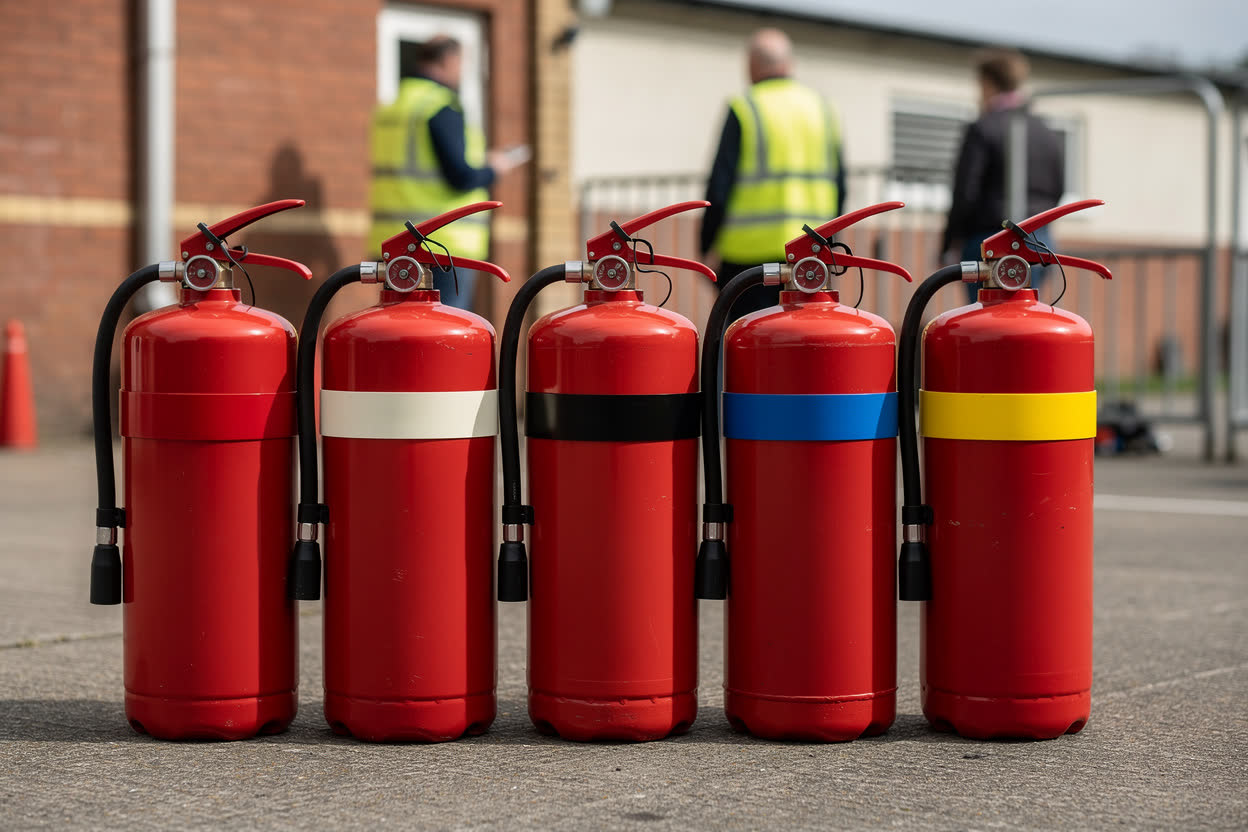
All fire extinguishers have a red body. A coloured band or label shows the type:

  • Red: water.
  • White: water mist.
  • Cream: foam.
  • Black: carbon dioxide, also called CO2.
  • Blue: dry powder.
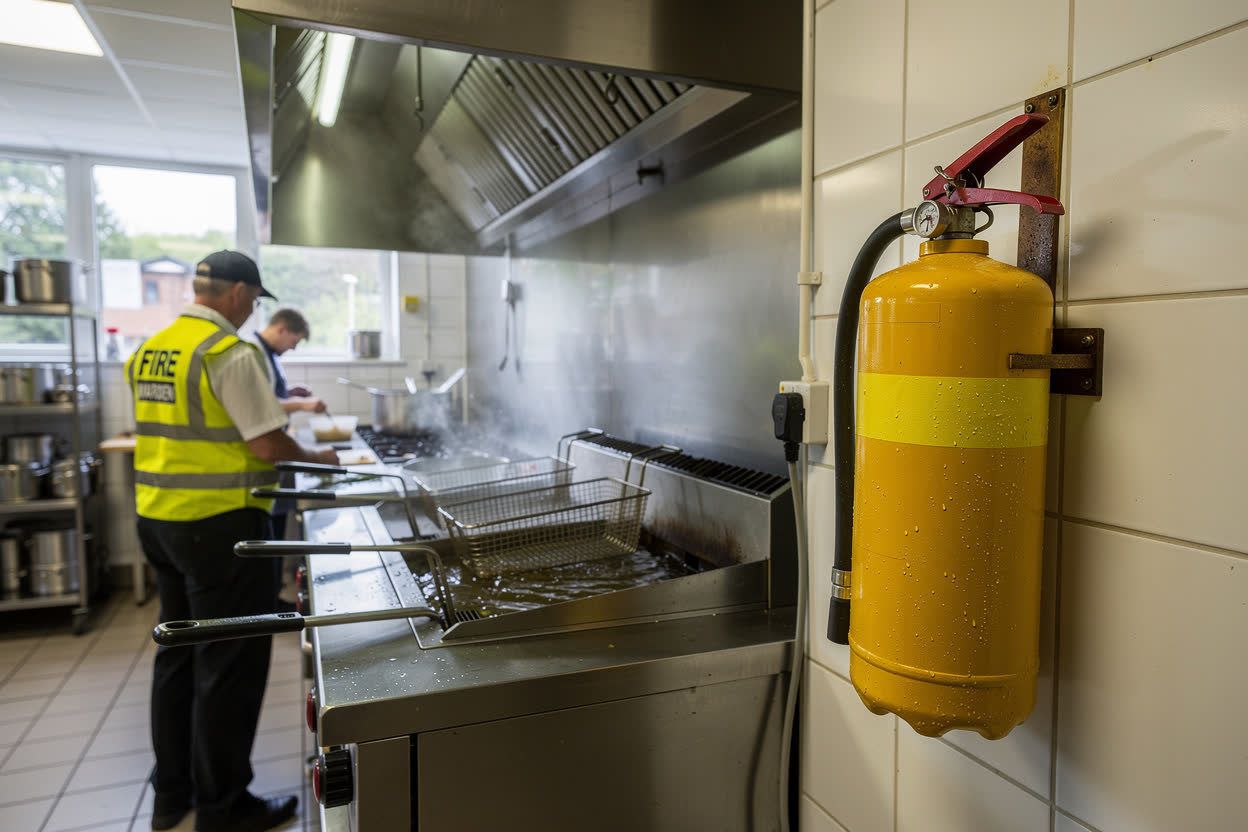
  • Yellow: wet chemical.

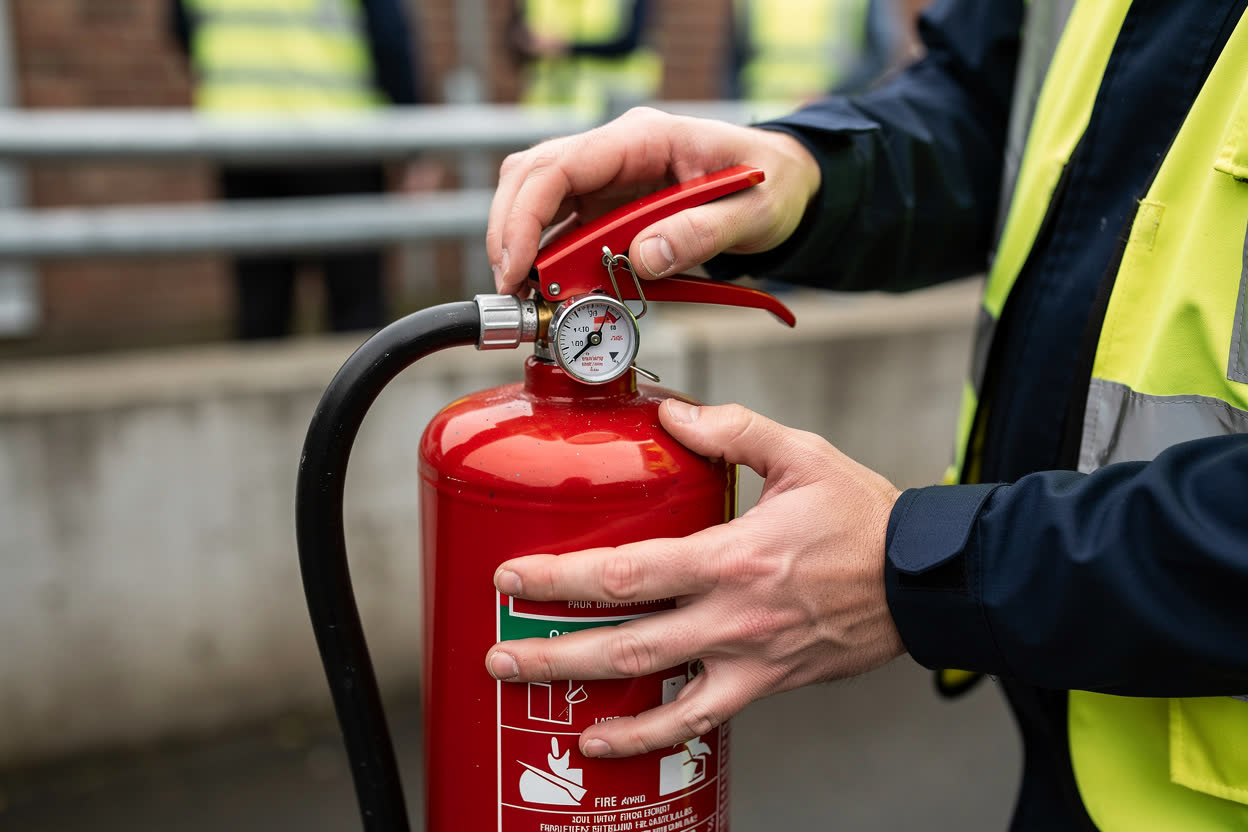
The label also shows, in pictures and words, which classes of fire the extinguisher can be used on, and any it must not be used on. Always read it before use.

Water and Water Mist
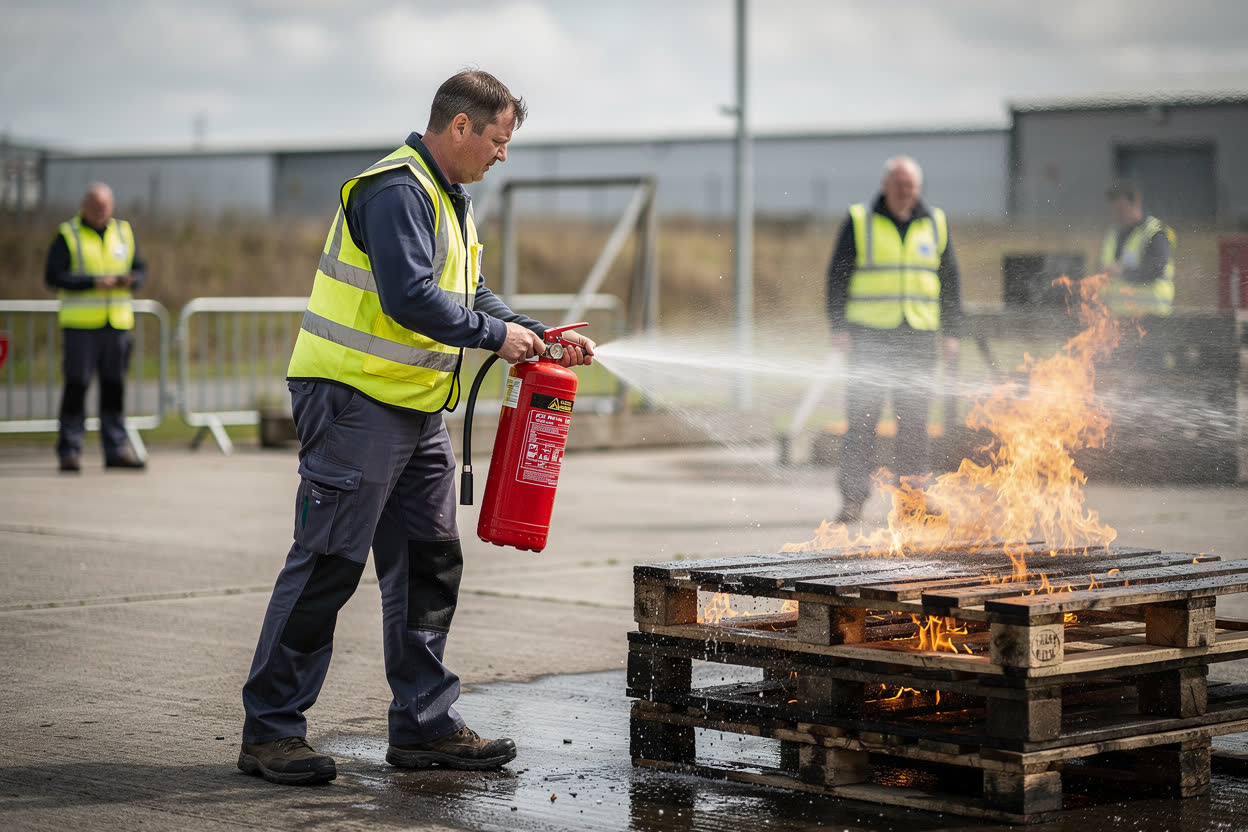
  • Water extinguishers are for Class A fires only: paper, wood, textiles and other solids. They cool the burning material. Never use them on burning liquids, cooking oil or live electrical equipment.
  • Some water extinguishers contain additives that make them more effective, but the same limits apply.
  • Water mist extinguishers spray very fine droplets. Depending on the model, they can be used on Class A, B and F fires, and on electrical equipment up to a stated voltage. They leave little mess. Always check the label, because models differ.
Foam and Carbon Dioxide
  • Foam extinguishers are for Class A and Class B fires. They form a blanket over burning liquids, smothering the fire and stopping it re-igniting. Do not use them on live electrical equipment unless the label says they have been tested for this.
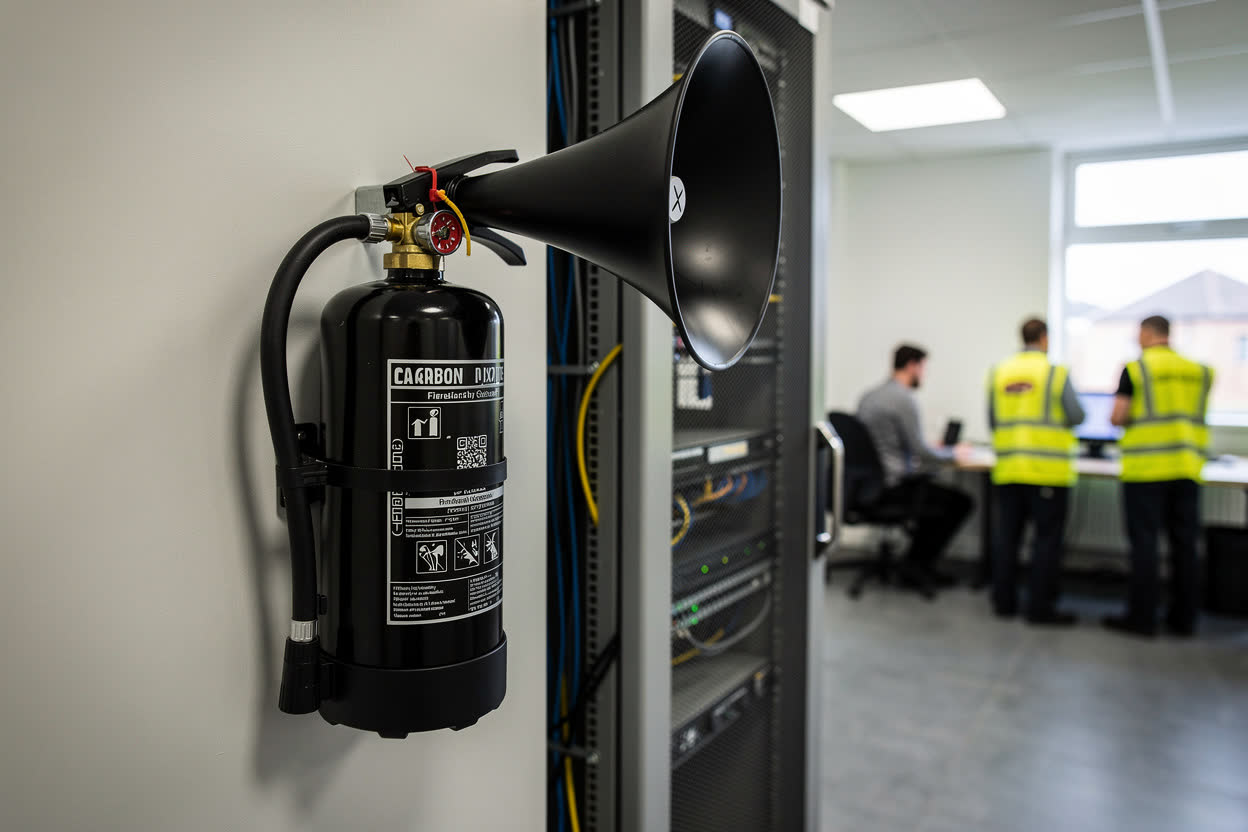
  • Carbon dioxide extinguishers are mainly for fires involving electrical equipment, and are also effective on small Class B fires. They leave no residue, so they do not damage equipment. But the gas disperses quickly, so the fire can re-ignite, and they are not effective on Class A fires such as burning paper.
Powder and Wet Chemical
  • ABC dry powder extinguishers can be used on Class A, B and C fires, and on electrical equipment. But the powder cloud makes it hard to see and breathe, so they should not normally be used indoors in small rooms. They are common in vehicles, forecourts and outdoor areas.
  • Specialist powder extinguishers, such as M28 and L2, are made for Class D metal fires. L2 powder is used on lithium. They are only provided where metals that burn are used.
  • Wet chemical extinguishers are for Class F fires in deep fat fryers and cooking oils. They cool the oil and form a soapy layer that seals the surface.
How Many Extinguishers, and Where?

The number and type of extinguishers is decided by the fire risk assessment. As a general rule:

  • Most buildings need at least two Class A extinguishers on every floor, unless the floor is very small.
  • Extra extinguishers are provided for special risks, such as carbon dioxide near electrical equipment and wet chemical in kitchens.
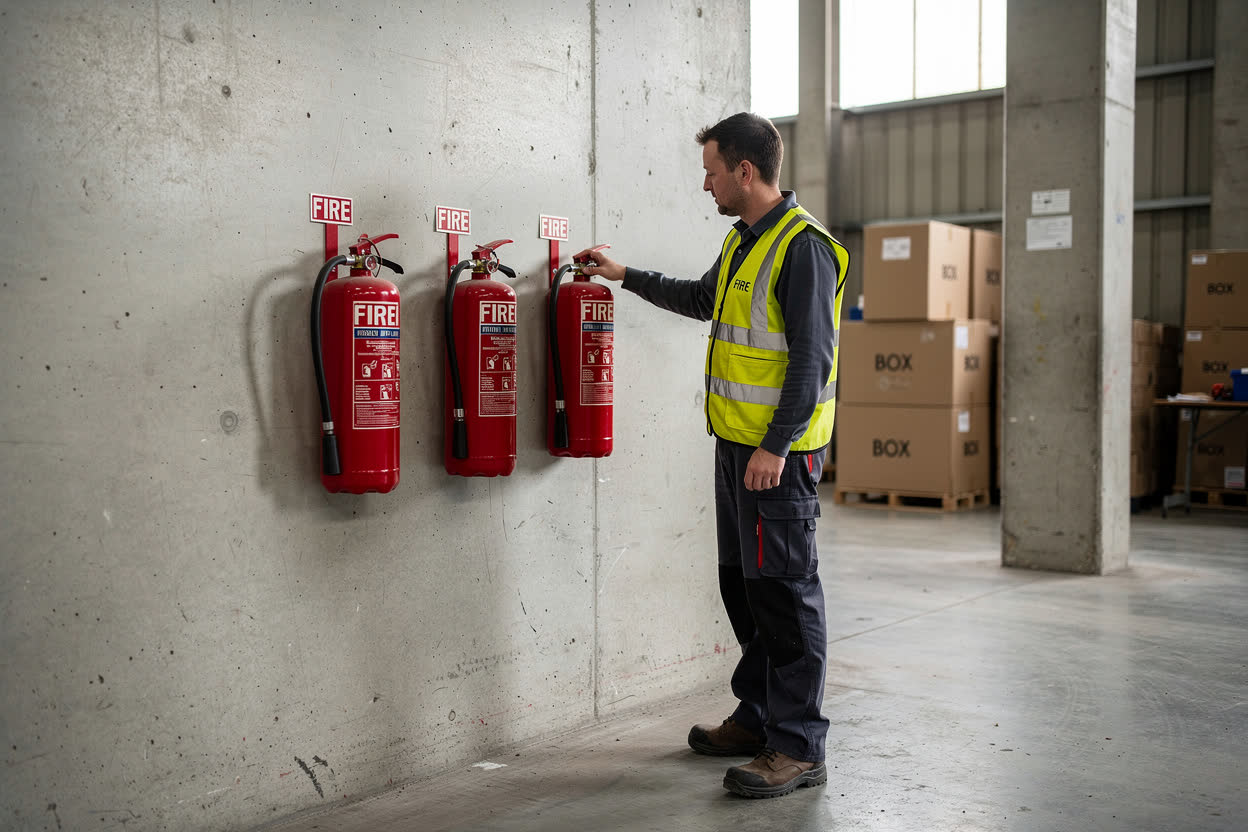
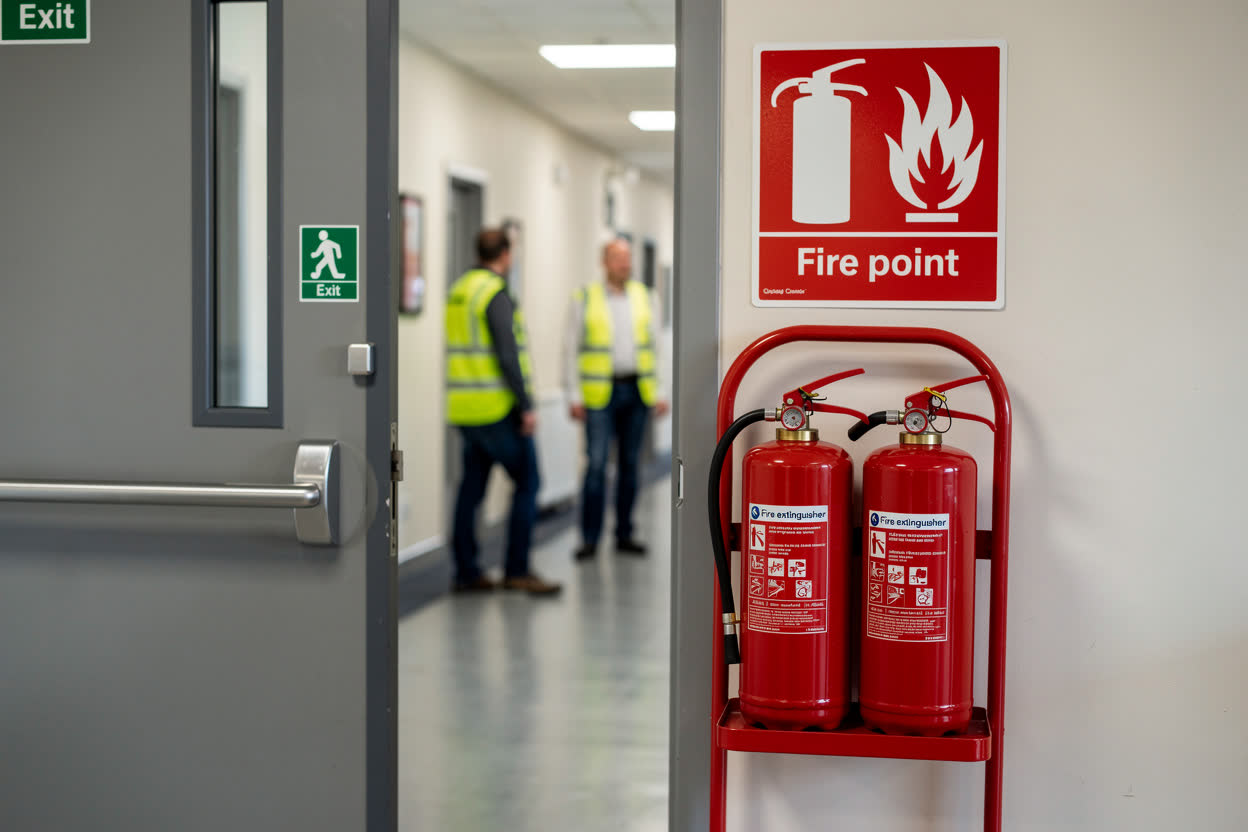
  • Extinguishers are placed on escape routes, near exits and beside the hazard, so that you never have to go past a fire to reach one.
  • They are mounted on brackets or stands, with a sign above, so they are easy to see and reach.
  • Selection, siting and maintenance follow the Irish Standard IS 291.
Summary

In this module, you have learned that:

Fire needs heat, fuel and oxygen, and extinguishers work by removing one of them.

Fires are grouped into classes A, B, C, D and F, and electrical fires need non-conductive extinguishers.

Extinguishers are colour coded: red water, white mist, cream foam, black CO2, blue powder and yellow wet chemical.

In the next module, we will look at how to decide whether it is safe to fight a fire.

Knowledge Check
Which extinguisher should be used on a fire in a deep fat fryer?
Select one answer, then press Check.
Water
Carbon dioxide
Wet chemical
Foam
Correct. Wet chemical extinguishers, with a yellow label, are designed for Class F fires in cooking oils and fats.
Not quite. Water on burning oil causes a violent fireball. Think about which extinguisher is made for Class F fires, and try again.
Get the full course →Answer the question to unlock the next module.
Page 1 of 15